Discerning God’s Will in a World Full of Noise
I have never been in the military, but I am convinced that church business meetings are the civilian equivalent of trench warfare. Everyone has an opinion. Everyone has a "the Lord laid this on my heart." And somehow, all those burdens contradict each other.
I remember one particular meeting years ago where we were trying to decide something that, in hindsight, was not nearly as important as we made it out to be at the time. One dear soul stood up and said the Lord had told her one thing. Another dear soul spoke up two minutes later and said the Lord had told him the exact opposite. I sat there thinking, "Well, Lord, You're going to have to pick a lane, because right now You appear to be talking out of both sides of Your mouth." (I know full well He wasn't. But it sure felt that way from where I was sitting.)
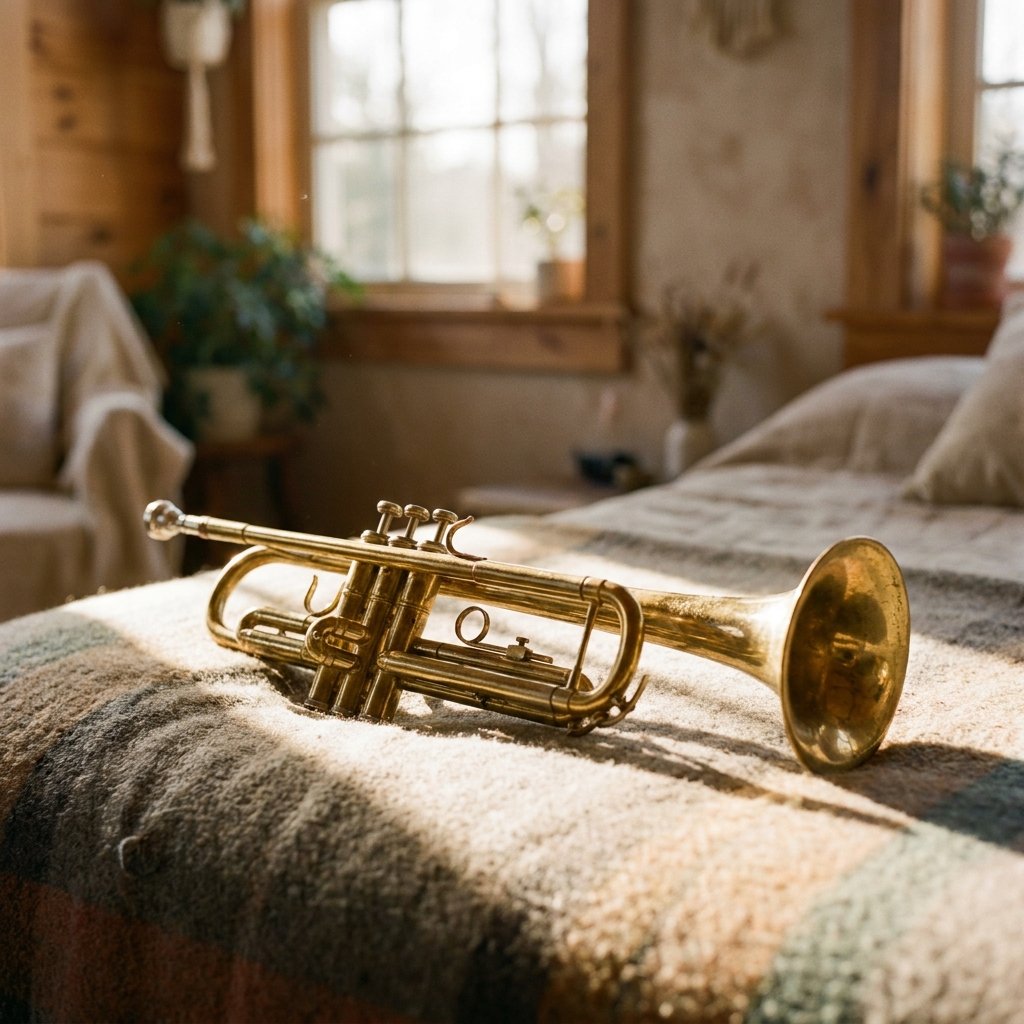
That's when I stumbled onto a verse I'd read a hundred times before but never really heard until that moment. Paul, writing to the Corinthian church about spiritual gifts and orderly worship, drops this little nugget in the middle of his argument: "For if the trumpet give an uncertain sound, who shall prepare himself to the battle?" (1 Corinthians 14:8).
Paul wasn't writing a military manual. He was talking about tongues and prophecy and the importance of speaking in a way the church could actually understand and be edified by. But the illustration he chose would have made perfect sense to his readers.
In ancient warfare, a trumpet wasn't just noise. It was language. One blast meant assemble. Another meant march. Another meant charge. Another meant retreat. Soldiers didn't have radios or texts or a general shouting instructions across a battlefield. They had a trumpet, and they had to know its sound the way you know your own mother's voice calling you in from the yard. If that trumpeter got confused, or worse, if two trumpeters started blowing two different signals at the same time, the army wouldn't charge forward in unified strength. It would freeze. It would scatter. Soldiers would look at each other, unsure whether to advance or run, and in that hesitation, the enemy would have a field day.
The Real Battle Isn't Always With Bullets
Here's where I think this verse steps clean out of ancient Corinth and lands right in the middle of your living room and mine. We are surrounded, every single day, by trumpets. Except our trumpet sounds don't come from brass instruments. They come from cable news anchors, Facebook comment sections, well-meaning relatives, podcast hosts, that one coworker who always has a strong opinion, and yes, sometimes even fellow church members standing up in a business meeting convinced they've got a word from the Lord.
Every one of those voices is blowing a trumpet. And here's the maddening part: they don't all agree. One voice tells you to be afraid. Another tells you fear is a sin, and you should never feel it. One tells you the way to fix your marriage, finances, parenting, and church is Plan A. Another swears up and down that Plan A will destroy you and only Plan B will save you. Meanwhile, you're standing there in the middle of the battlefield of your own life, trying to figure out which direction to march, and all you hear is noise. Contradictory, competing, confusing noise.
I don't know about you, but that kind of noise doesn't just confuse me. It exhausts me. It's like trying to dance to two different songs playing at once. No matter which way I step, I'm out of rhythm with something.
And Paul's question cuts right to the heart of it: "who shall prepare himself to the battle?" Nobody can. Not with any confidence, anyway. When the trumpet gives an uncertain sound, soldiers don't march boldly forward. They stand there paralyzed, or worse, they scatter in ten different directions, each one guessing at what the sound meant. An army full of soldiers going ten different directions isn't an army anymore. It's a mob. And a mob doesn't win battles. It just makes it easier for the enemy to pick everybody off one by one.
That, my friend, is exactly what happens to us spiritually when we let every competing opinion around us have equal authority in our ears. We don't move forward with the confidence of soldiers who know their orders. We freeze, doubt, second-guess, and eventually just sit down in the mud, worn out from trying to march to sounds that never agreed on a direction in the first place.
Tune Your Ear to the One Trumpet That Matters
So what's the answer? Do we ignore every voice, opinion, and piece of counsel that comes our way? Not exactly. But we do need to know Whose voice gets the final word.
Back in Numbers 10, long before Paul ever picked up a pen, God gave Israel a very specific instruction about trumpets. He had Moses make two silver trumpets, and He specified exactly what each sound meant. Assembly. Alarm. Journey. Battle. God didn't leave His people guessing. He gave them a sound they could learn, trust, and obey without hesitation, because it came from Him. The trumpets weren't blown by just anybody with an opinion. They were blown by the priests, under God's direction, according to God's pattern. That's the whole point. The sound that mattered wasn't just a sound. It was the sound God Himself had ordained.
I believe the same principle holds true for us today. In the middle of all the competing noise, we don't need to catalog every opinion and try to average them into some sort of spiritual consensus. We need to know the sound of our Shepherd's voice so well that everything else, by comparison, sounds like static. Jesus said it plainly in John 10:27: "My sheep hear my voice, and I know them, and they follow me."
Not "My sheep evaluate every voice and pick the loudest one."
Not "My sheep take a vote among all the shepherds shouting in the field."
The sheep hear His voice, and they follow. Period.
Here's the practical part, because if you're like me, you're wondering how in the world you actually do this.
First, you have to spend enough time with the Shepherd for His voice to become familiar. You can't recognize a sound you've never really listened to. That means time in the Word, not just skimming it for a quick verse to slap on a coffee mug, but sitting with it long enough that His character, patterns, and heart start to become as familiar to you as your own reflection.
Second, you test every other trumpet against that one. When Facebook, Aunt Carol, Pastor So-and-So's podcast, and your brother-in-law all say different things, you don't ask, "Which one sounds most convincing?" You ask, "Which one lines up with what I already know to be true of God's character and God's Word?"
Third, and this one is hard for those of us who like to have all our ducks in a row before we move, sometimes God's trumpet sounds like silence for a season. That's not the same as an uncertain sound. Silence isn't confusion. Silence is often an invitation to wait, trust, and keep our ears tuned rather than bolting toward the first noise that offers relief from the waiting.
I'll be honest, I still catch myself getting rattled by all the competing trumpets out there. But every time I do, I come back to this: God is not the author of confusion (1 Corinthians 14:33, just a few verses down from our trumpet passage, by the way). If a sound is genuinely His, it will never leave you in a fog of contradiction and panic. It may stretch you. It may ask hard things of you. But it will be clear enough to march to. And that, friend, is a sound worth tuning your whole life around.
🔍 PULLING BACK THE CURTAIN: A Peek at the Study Behind This Post
This one started during my personal devotion time as I was studying about the armor of God. My study led me to a verse in 1 Corinthians, which then brought to mind a church business meeting where two people, in the same conversation, both claimed the Lord told them opposite things, and I remember thinking, "Well, somebody's trumpet is broken."
Step 1 — The find: My Bible study on the armor of God led me to 1 Corinthians 14, so I flipped there directly and landed on verse 8: "For if the trumpet give an uncertain sound, who shall prepare himself to the battle?" I read it in context, verses 1 through 12, to make sure I wasn't yanking it out of its setting about tongues and prophecy.
Step 2 – The mental connection: After reading about the “uncertain sounds,” my mind immediately thought of the many times I’ve tried to discern God’s voice from my own wants and the noise of the world around me. I surmised I was not the only Christian dealing with this issue regularly.
Step 3 — The rabbit trail: I wanted to know what an actual military trumpet signal system looked like in Scripture, so I chased it down to Numbers 10:1-10, where God gives Moses very specific instructions for silver trumpets: one sound for assembly, another for breaking camp, and another for battle. That confirmed the idea that God is a God of clear signals, not vague ones.
Step 4 — The connection: I remembered John 10:27, "My sheep hear my voice," and it clicked that the solution to the "uncertain sound" problem isn't evaluating every voice. It's knowing one voice so well that everything else is easy to compare against it, much like how people are trained to detect counterfeits. I also cross-referenced 1 Corinthians 14:33, just a few verses later: "God is not the author of confusion," which tied the whole passage together in a bow I wasn't expecting.
Step 5 — The crystallization: Once I had the trumpet, the Numbers 10 background, and the Shepherd's voice from John 10, the devotion basically wrote itself: the problem is competing voices, the solution is tuning our ear to the one true Voice through time in the Word and testing everything else against it.
This whole hunt took me about 40 minutes (not counting my original personal devotion time), most of which was spent flipping back and forth trying to remember exactly where that trumpet passage in Numbers was hiding.
If you've got five minutes and a concordance (or a Bible app search bar, no shame in that), you can do exactly what I did. Pick a word that's bugging you, chase it through a couple of cross-references, and watch how the Lord starts connecting dots you didn't even know were related. That's the treasure hunt, and it's waiting for you, too.