Waist-Deep Worship
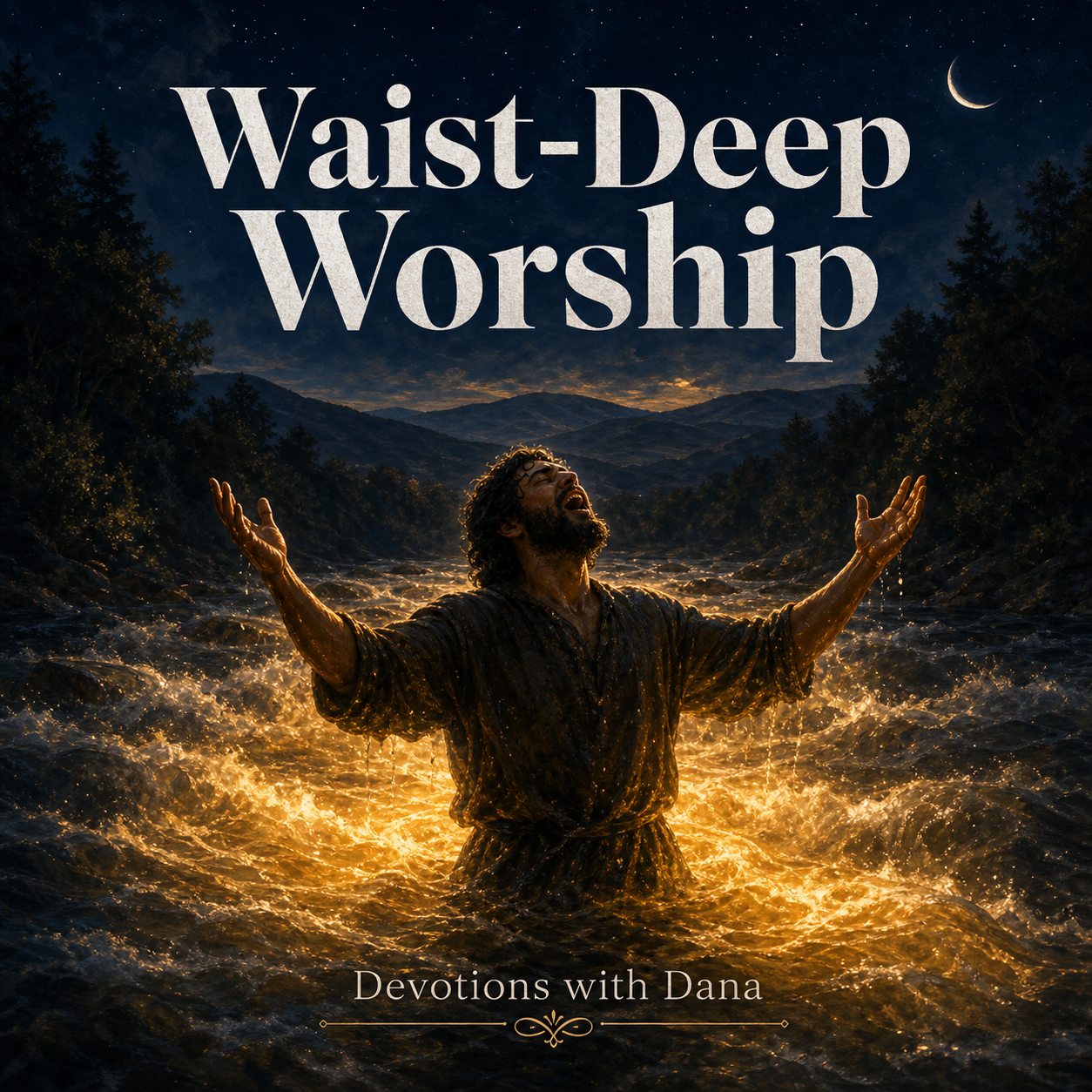
Sometimes, authors write a scene or a line that stays with them long after it's been written. Such was the case in my newest book, Hope Refined. King David is fleeing his throne in the middle of the night. It was not a dignified, strategic retreat, mind you, but a desperate, stumbling flight through the dark. The river ahead of him is swollen and angry, but the fleeing king wades into it anyway, the cold water rising to his waist.
And then? He sings.
Not a quiet, trembling hum. He lifts his voice in praise to God, right there in the middle of a raging river.
In the dead of night.
With everything he's ever known crumbling behind him.
When my character Merlin watches in disbelief and marvels at how David could possibly sing in a moment like that, Jesus leans over and quietly confides: He is singing to drive back the darkness.
I love that line, and I can't get it out of my head. Singing to drive away the darkness. Wow!
We tend to think of praise as a response to good things. When God blesses us, we clap and sing. When the sun is shining, we lift our hands in praise. But David wasn't in a praiseworthy situation by any earthly measure. He was soaking wet, politically ruined, and running for his life. And yet there he was with his mouth open and heart lifted, singing.
Here's what David understood that we often forget: praise is not just an expression of happiness. It's also a declaration of war.
The psalmist knew this firsthand.
In Psalm 42, he writes, "Why art thou cast down, O my soul? and why art thou disquieted within me? hope thou in God: for I shall yet praise him, who is the health of my countenance, and my God."(Psalm 42:11)
Notice he doesn't say, "I feel like praising God." He commands his own soul to hope. He preaches to himself. He chooses praise before the feelings catch up.

That's what waist-deep worship looks like.
When the darkness closes in (and it will, my friend), our instinct is to go quiet.
To pull the covers up.
To stop singing because nothing feels worth singing about.
But that's exactly the wrong moment to go silent. The darkness doesn't retreat when we despair. It advances. What does drive it back is the sound of a soul declaring, "You are still God. You are still good. And I am still Yours."
Think about Paul and Silas in that Philippian jail, beaten, bleeding, and locked in stocks at midnight.
"And at midnight Paul and Silas prayed, and sang praises unto God." (Acts 16:25)
They didn't wait until they felt better or until they were freed. They didn't wait until morning. They sang at midnight, and the very foundations of that prison shook.
Midnight has a way of lying to us. It tells us that the darkness is permanent, that God has forgotten us, and that our situation is hopeless. Praise cuts through that lie like a blade. When we rehearse who God is, we're not pretending everything is fine or ignoring the trouble surrounding us. We're reminding our trembling hearts of what is true.
David knew the darkness personally. The man wrote Psalm 22, for goodness' sake!
"My God, my God, why hast thou forsaken me?"
He was no stranger to despair. But he also wrote Psalm 34:
"I will bless the LORD at all times: his praise shall continually be in my mouth."
At all times. Not just the good ones.
So the next time you find yourself waist-deep in something cold, dark, and overwhelming, don't go quiet. Open your mouth. It might be shaky. It might be off-key. It might feel completely ridiculous or even hypocritical. Sing anyway.
Quote a scripture out loud.
Name the attributes of God one by one.
Tell the darkness exactly Who it's up against.
You're not performing for an audience. You're not ignoring the pain.
You're simply loading your weapon!
🔍 PULLING BACK THE CURTAIN: A Peek at the Study Behind This Post
The spark for this devotion wasn't a concordance search. Iit was a character conversation in my latest novel. That moment when Jesus whispers to Merlin, "He's singing to drive back the darkness," is the kind of line that, once written, demands a devotion of its own.
Start with the story's origin. The fictional scene—David, waist-deep in a river, singing in the dark—mirrors actual events in 2 Samuel 15–16, when David flees Jerusalem during Absalom's coup. Read that passage and notice what isn't there: despair, silence, or surrender. David weeps (2 Samuel 15:30), yes, but he also worships. The emotional complexity there is gold.
Follow the thread to the Psalms. Many scholars believe Psalm 3 was written during this very flight from Absalom(the superscription says so). Read it. It's seven verses of a man talking himself from terror to trust. That's your devotional hook: praise as an act of the will, not the emotions.
Search for the "midnight praise" pattern. A quick cross-reference search on "praise + night + prison" leads you straight to Acts 16:25 and Paul and Silas. Look up the Greek word for "sang praises" (hymnéō) and you'll find it's the same root used for the hymns sung at Passover. These men were singing Passover hymns in chains. Chills.
Dig into Psalm 42 & 43. The phrase "why art thou cast down, O my soul?" is a man preaching to himself, a practice the Puritans called "soliloquizing the soul." Read commentaries by Matthew Henry or Charles Spurgeon on this verse; both describe praise as spiritual warfare, not just sentiment. That's your application backbone.
Let the concept crystallize. The devotion isn't about happy singing. It's about strategic singing and using praise as a weapon that pushes back spiritual darkness. At this point, the title almost writes itself: Waist-Deep Worship.
Total study time: About 2–3 hours (not counting the time spent researching and writing the book), spread across two mornings—one to follow the rabbit trails, one to let it settle. The best devotions, I find, need a night to marinate.
You don't need a seminary degree to study like this. All you need is one interesting detail, a concordance (or a Bible app with cross-references), and a willingness to follow where the text leads. Grab your Bible and see where it takes you. You won't regret it!
A rooftop.
A stolen glance.
A choice that will shake a kingdom.
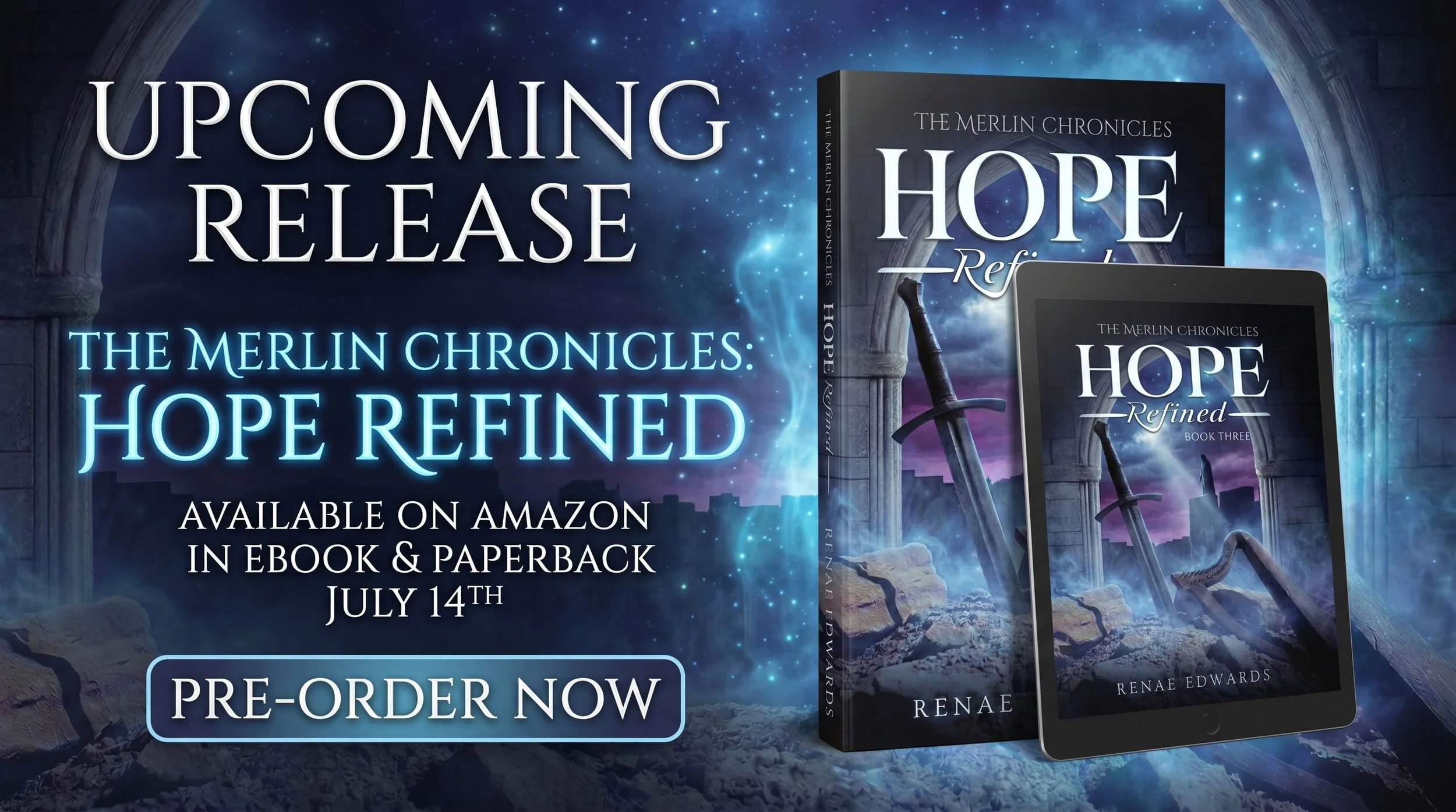
In Jerusalem's golden years, Merlin serves as adviser to King David. Instead of the model of kingship he came to find, he watches a throne glitter with promise even as shadows gather at its edge. What begins as a lesson in kingship becomes something far deeper: a test of loyalty, a burden of truth, and a warning that the noblest of men can still fall.
Merlin is shaped by a story that will echo far beyond Jerusalem and into the legend he has yet to live.
For readers who love biblical fiction that refuses to look away from hard questions, Hope Refined offers a moving portrait of sin's cost, repentance's pain, and the relentless grace of God.