Why We Want God’s Help But Not His Rule

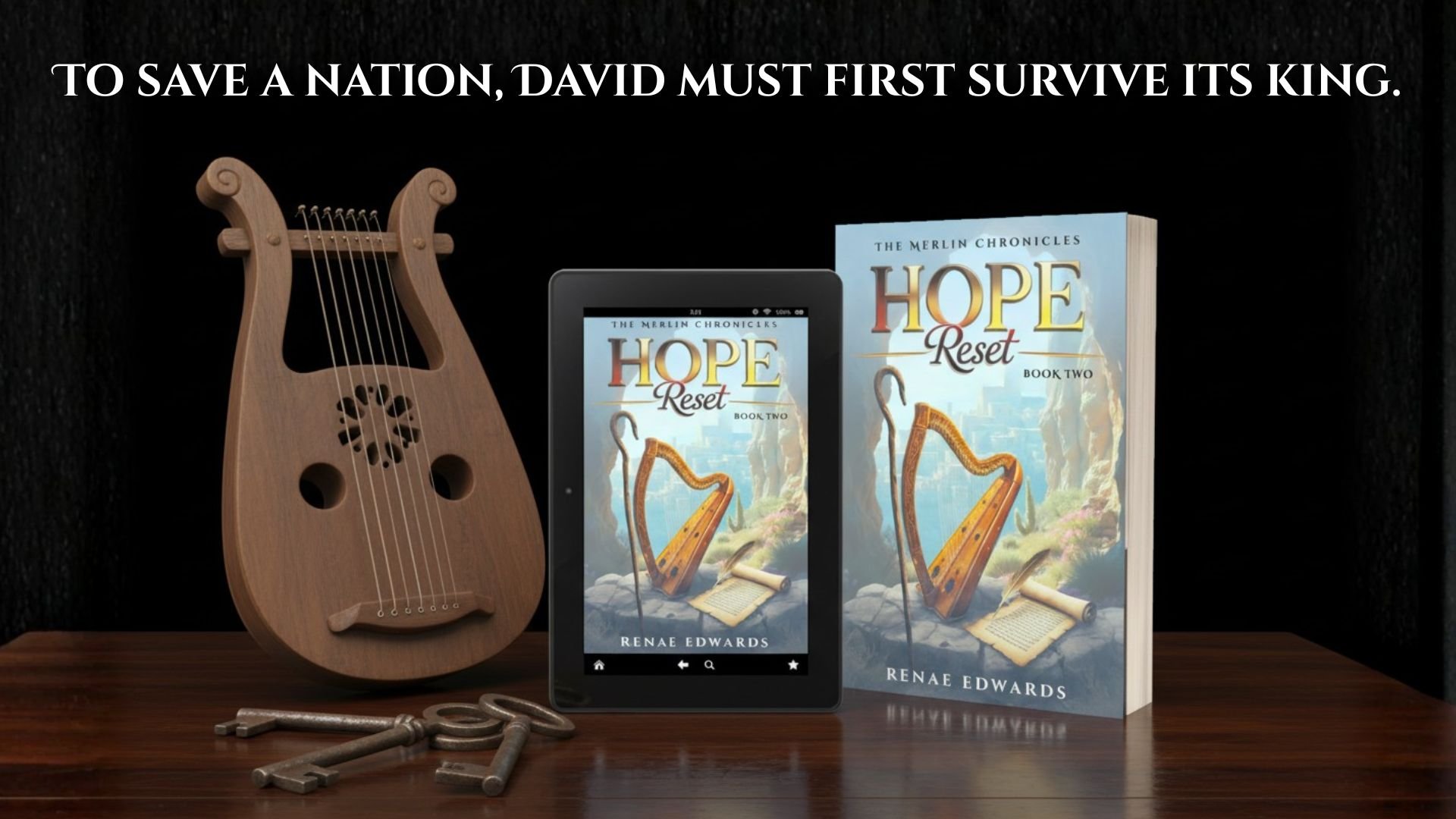
My new book, Hope Reset, is a Christian historical fiction/fantasy novel that follows the legendary advisor Merlin as he embarks on an extraordinary journey through time alongside Jesus. In this story, Jesus guides Merlin through the life of David—the shepherd-warrior who became Israel's greatest king—to prepare him with the wisdom he'll need when he returns to Camelot to help Arthur become the king he's destined to be.
In one particularly powerful scene, Merlin witnesses young David serving under King Saul, who was, frankly, a wreck. Saul was plagued by deep paranoia and violent, unpredictable rages. David, renowned for his skill with the harp, would often play music that brought peace to the king's troubled mind. David had also saved Israel by defeating the giant Goliath.
But even though David was loyal and provided the king with both peace and protection, Saul's jealousy over David's popularity curdled into a murderous rage. Just after David played his soothing music, Saul hurled a javelin at him, trying to pin him to the wall.
It was a stark picture of a divided heart: Saul desperately needed David's help, yet he despised the authority David represented.
Watching this terrible scene unfold, Jesus turned to Merlin and explained the core issue of the human heart, then and now:
“This is the way of men's hearts, Merlin. They want a David to slay their giants. They want his sweet music to soothe their troubled souls.” He paused, turning to Merlin. “But they do not want him to be king.”
Jesus continued, describing the pattern: “And like many who will come after him. They welcome My power when it serves their purposes, to vanquish their enemies or comfort their sorrows. But they resist when I claim My rightful place upon the throne of their hearts.” His voice grew quieter still. “They want the gifts, but not the Giver. They want the blessings, but not the rule of the One who blesses.”
Ouch. That hits close to home, doesn’t it?
We can look at Saul and think, Wow, what a fool for trying to kill the very person who helped him! But we do the same thing every single day.
When life gets overwhelming, like when we face a massive financial problem (a giant), or we’re dealing with anxiety or a health crisis (a troubled soul), we call out to God. We want Him to show up with His power, vanquish the enemy, calm the storm, and bring us peace. We want the giant slayer and the soul-soother.
The trouble starts when He finishes the job and asks for our submission.
The moment God steps down from being our emergency service provider and asks to be acknowledged as the sovereign King of our lives, many people (maybe even us) balk. We love the gifts (the peace, the blessings, the victory), but we don't want the Giver’s authority.
We want God to fight our battles, but we don't want Him to dictate how we spend our money.
We want Him to soothe our souls, but we don't want Him to tell us who we should forgive or how we should use our time.
We want Him to lead us to victory, but we resist when He claims His rightful place on the throne of our decisions.
Unacknowledged authority is the very definition of rebellion. We can't claim loyalty to a King we refuse to obey.
The truly encouraging part of this story, though, is what David ultimately represented: Faith that translates into submission. David proved that true strength comes not from resisting God, but from trusting and obeying Him.
If you want the fullness of the peace and victory God offers, you have to be ready to lay down your crown and acknowledge Him as King. It means surrendering your rule over your own life, recognizing that the one who gives the blessings deserves the authority to guide them.
Letting Him be King isn't restrictive. It’s actually the safest position you can be in. After all, who would you rather have guiding your life: a troubled, shortsighted heart (like Saul's), or the perfect, all-powerful Giver?