You Can’t Mourn What You Never Fed
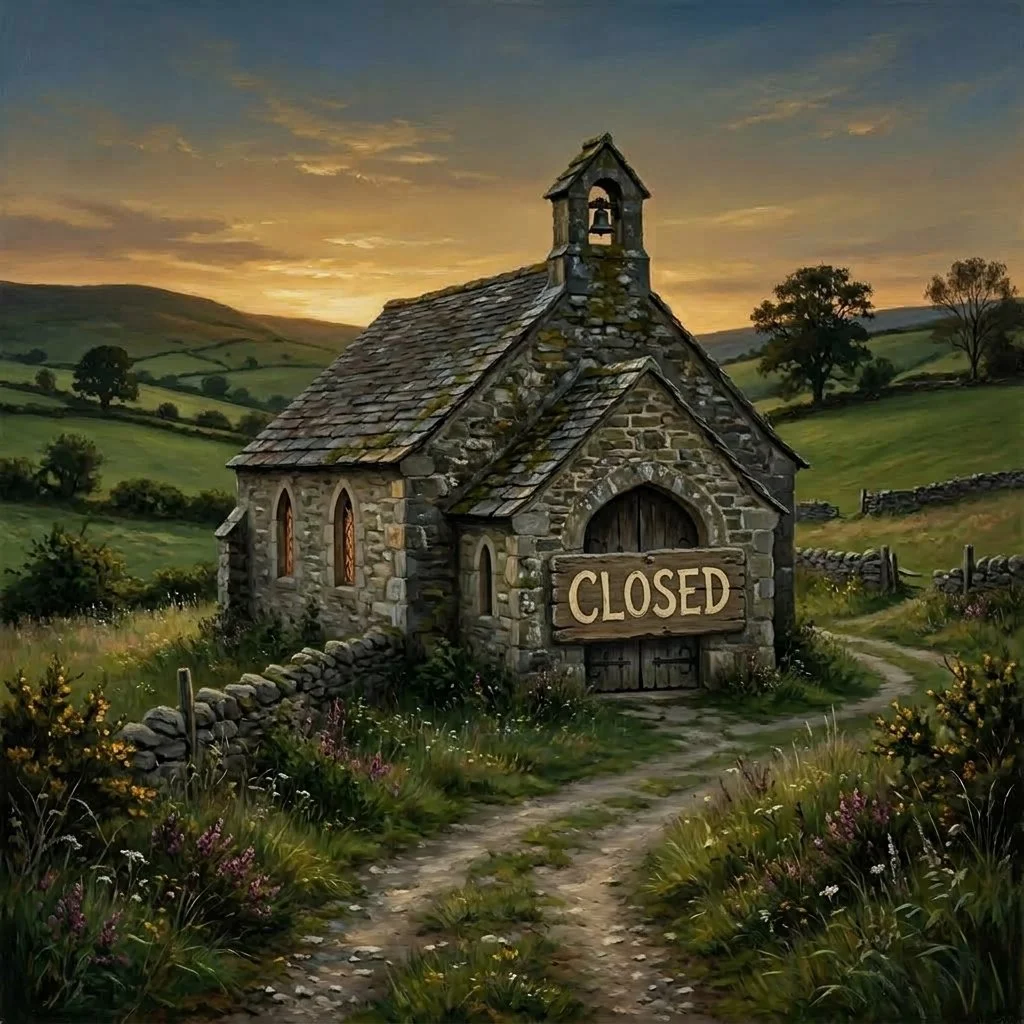
Sunday was a hard day. Our little Welsh community said goodbye to another chapel, a ministry over 300 years old that once echoed with hymns and, believe it or not, once shaped a missionary whose name still draws pilgrims from the other side of the world. Robert Jermain Thomas spent his early years in this very chapel, where his father served as pastor. In his twenties, Thomas carried the gospel to Korea and gave his life for it in 1866. That's the legacy these old stone walls hold. And this past week, the chapel went dark for good.
The gentleman who had to make the call didn't do it lightly. He wrestled with the decision for months. He watched his little congregation (who hadn’t had a pastor in over 30 years) shrink year after year. He lost faithful members, buried the church treasurer, and finally ran out of hands to keep the doors open and the bills paid. When he made the announcement, he expected sorrow. What he got instead was his phone ringing off the hook. Sadly, it was not from folks offering to help, but from people who hadn't darkened the chapel doorway in years, furious that "their" family chapel was closing.
Here's what baffles me. Where were these callers on the Sundays when the pews sat empty? Where was their tithe when the electric bill came due? Where was their prayer, their casserole, their helping hands during events, or their voice raised in song? You cannot starve something for decades and then weep when it dies of hunger. That's not grief for a chapel. That's grief for a memory, for the version of themselves that used to belong somewhere, back before life got busy and God became optional.
I think of the church at Ephesus in Revelation 2. Jesus doesn't scold them for bad doctrine. In fact, He commends them for that. No, He scolds them for leaving their first love. And then He says something that ought to stop us cold: "Remember therefore from whence thou art fallen, and repent, and do the first works; or else I will come unto thee quickly, and will remove thy candlestick out of his place, except thou repent" (Revelation 2:5). A candlestick removed. That's not a metaphor these grieving callers would enjoy hearing, but it's exactly what they witnessed. The light didn't go out because God had abandoned that ministry. It went out because the oil ran dry, and too few cared to bring more.
Here's where this hits closer to home than we'd like. It's easy to shake our heads at people who only care about church when it's closing. But how many of us treat our own walk with the Lord the same way? We're only faithful when it's convenient, generous when there's extra, and prayerful when there's a crisis. Then, when our spiritual life feels dry and distant, we're shocked. What happened? We didn't starve a chapel. We starved ourselves. And just like that grieving caller, we want to mourn the loss of closeness with God without ever asking what we did to feed that closeness in the first place.
Faithfulness isn't sentimental. It's not something we feel nostalgic about after the fact. It's something we show up and do, week after unglamorous week, whether or not it feels meaningful in the moment. The widow's mite mattered because she gave when nobody was watching, not because she wept over the temple treasury after it went bankrupt. If we want revival in Wales (and we desperately do), it won't come from people mourning empty pews. It will come from people filling them, tithing into them, praying over them, and loving the people who might walk through those doors for the very first time.
So here's my prayer, and I hope you'll pray it with me: Lord, stir hearts here in Wales before it's too late for the next chapel and the one after that. And Lord, show each of us (myself included) anywhere we're mourning a closeness with You that we ourselves have neglected to feed. Absence always has consequences. Let's not wait until the doors are locked to notice.
🔍 PULLING BACK THE CURTAIN: A Peek at the Study Behind This Post
This devotion started with heartbreak, not a Bible search, as we watched a 300-year-old chapel in our community close its doors, and then heard the outrage from people who hadn't attended in years. That contradiction (mourning loudly what you never fed quietly) is what sent me hunting through Scripture for a match.
I started by asking myself: what's the Biblical word for people who care about a church only after it's gone? That led me straight to the seven churches in Revelation 2-3, since Jesus addresses real congregations with real spiritual conditions.
I re-read Revelation 2:1-7, the letter to Ephesus, and the phrase "thou hast left thy first love" jumped out immediately. It captured exactly what I was seeing in these phone calls: nostalgia without any ongoing devotion.
I paused on verse 5 and noticed the progression: remember, repent, do the first works, "or else." That "or else" is what gave the devotion its teeth. It's not just a sad feeling, it's a consequence (the candlestick removed).
I went down a short rabbit trail researching Robert Jermain Thomas, the Welsh missionary connected to chapel life in our community, to confirm dates and details so I could reference him accurately and honor his story rather than just mention his name in passing.
The devotion crystallized when I realized the real audience wasn't just "people who complain about closing chapels," but it was all of us whenever we treat our own relationship with God the same way: absent when it's inconvenient, then shocked when it feels distant.
This one came together in about 40 minutes, though the ache behind it will linger a lot longer than that, I’m certain. Some devotions you research; others you live through first.
If you've ever had a moment of righteous frustration turn into personal conviction, try this process yourself: name the emotion, find the Bible passage that mirrors it, then ask what it means for you personally before you ever apply it to anyone else. The treasure is usually closer than you think. Grab your Bible and start digging.