Is Your Bible Gathering Dust on the Shelf?
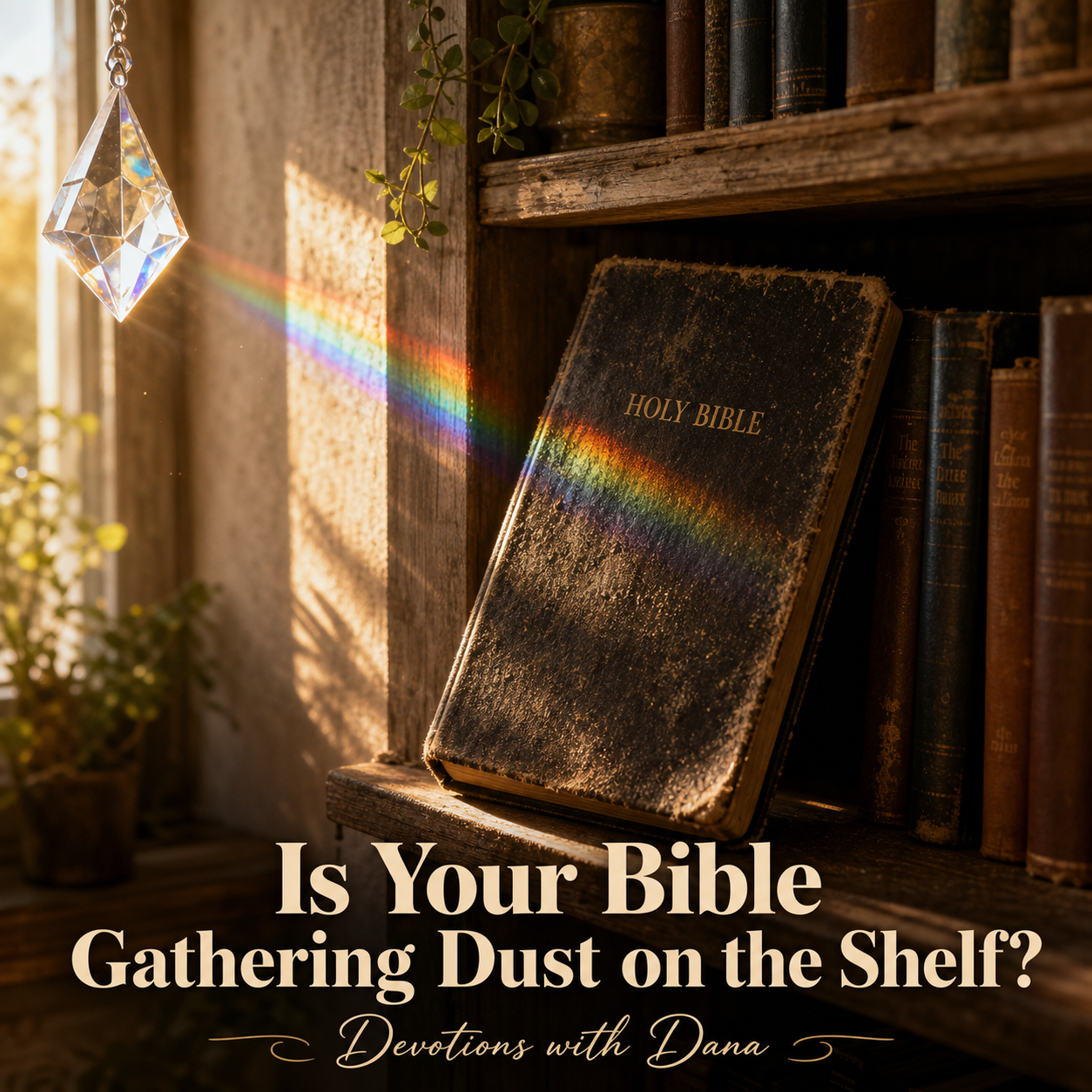
I'll be honest with you, I've read through a passage of Scripture, nodded my head like a wise owl, and thought Got it. Memorized. Filed away, then moved on to the next chapter. Check. Done. Spiritual duty accomplished.
But here's the thing that rattled my cage when I finally understood it: the Bible isn't a textbook. You don't read it once, ace the exam, and shelve it next to your old college notes. It's not that kind of book. It's not really even a book in the way we normally think of books. It's alive.
Don't take my word for it. Take God's.
"For the word of God is quick, and powerful, and sharper than any twoedged sword, piercing even to the dividing asunder of soul and spirit, and of the joints and marrow, and is a discerner of the thoughts and intents of the heart." — Hebrews 4:12
Did you catch that first word? Quick. In the old King James sense, quick means living. Alive. Breathing. Active. The Word of God isn't a static monument you visit once on a school field trip. It's a living, moving, breathing thing that God uses differently in your life every single time you crack it open.
Have you ever held a prism up to sunlight? One beam of plain white light goes in, and out comes an entire spectrum of color: red, orange, yellow, green, blue, violet. Colors you didn't even know were hiding in that ray of light suddenly appear. The light didn't change. The prism didn't change. But depending on the angle, the time of day, and the quality of light coming through, you see something completely different.
That's the Word of God.
The same verse you read when you were eighteen and carefree will reach out and grab you by the collar when you're forty-five and facing divorce. The Psalm that felt like pleasant poetry during an easy season will suddenly read like God wrote it just for you when you're face-down in the valley.
Hebrews 4:12 doesn't just say the Word is alive. It says it discerns the thoughts and intents of the heart. It knows exactly where you are. It knows what you need. And it meets you there.
Reading the Bible once, or even reading it through in a year, isn't finishing it. You will never finish it because it will never stop having something new to say to you. Every season of life is a new angle of the prism.
Every trial you walk through.
Every joy you celebrate.
Every doubt you wrestle with.
Every question you carry to your knees.
The Word has something to speak directly into that moment. But only if you're still opening it.
A dusty Bible on a shelf helps nobody.
The Word isn't meant to be a reference tool you pull out in emergencies, like the fire extinguisher under the kitchen sink. It's meant to be your daily bread.
"Man shall not live by bread alone, but by every word that proceedeth out of the mouth of God" (Matthew 4:4).
You don't eat breakfast once in January and declare yourself fed for the year. You come back every single day because you need it every single day.
Come back to the Word today. Even if you read that passage last week. Even if you have it memorized. Even if you think you already know what it says. Come back because today's angle of the prism might show you a color you've never seen before.
🔍 PULLING BACK THE CURTAIN: A Peek at the Study Behind This Post
It started when I noticed how many "new things" I was uncovering in familiar Bible passages. One story or verse after another, I was struck by that moment of "Wait, what? Did it always say that?" That's when I remembered what the Bible says about the Bible (yes, it's ironic, I know). The Word of God is "quick." Not quick like fast, but quick like alive. That single archaic definition in Hebrews 4:12 opened up a treasure chest.
Start with the word, not the verse. Looking up the original Greek for "quick" (ζάω / zao) in a Strong's Concordance reveals it means "to live, to be alive." This is the same root used when Jesus says, "I am the resurrection and the life." That connection alone sent the study in three different directions at once.
Follow the description. Hebrews 4:12 goes on to say the Word is "sharper than any twoedged sword" and a "discerner of the thoughts and intents of the heart." Cross-referencing the word "discerner" (kritikos in Greek, the root of our word "critic") shows that it means to judge or sift. The Word doesn't just inform; it evaluates where we are. That distinction is significant.
Find the illustration in nature. The prism metaphor came from meditating on why the same verse resonates differently in different seasons. A Bible concordance search on "light" and "word" pulled up Psalm 119:130 — "The entrance of thy words giveth light," and from there, the idea crystallized: one source of light equals an endless spectrum depending on the angle of your life.
Chase the cross-references. Matthew 4:4 ("every word that proceedeth out of the mouth of God"), Psalm 119:105 ("a lamp unto my feet"), and Isaiah 55:11 ("my word shall not return unto me void") all reinforced the central idea that the Word is active and purposeful, not passive and decorative.
Let the application sit overnight. The emotional impact of the devotion came from asking: How many times has a verse I've read a hundred times suddenly struck me in a new way? That personal reflection turned a theological truth into a pastoral one.
Total study time: About two hours spread across two mornings—one for the word study, one for the cross-references and writing. The prism idea took about thirty seconds on a walk.
Want to try it yourself? Pick any verse you think you already know. Look up one word in Strong's Concordance. Follow the rabbit trail wherever it leads. You will not be bored. I promise. The treasure hunt never gets old.