Overwhelmed and Out of Strength? How to Turn Pity into Praise
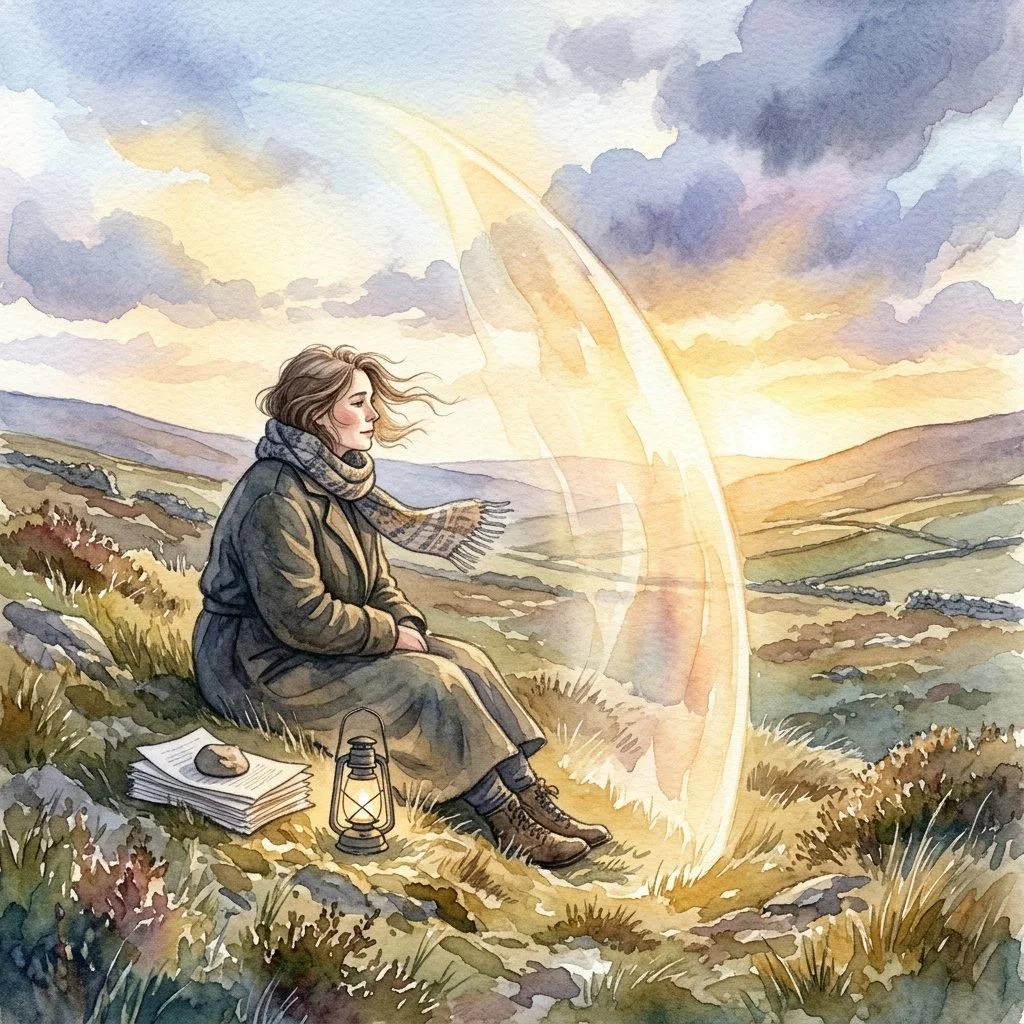
"LORD, how are they increased that trouble me! many are they that rise up against me. Many there be which say of my soul, There is no help for him in God. Selah." (Psalm 3:1-2)
David wrote Psalm 3 while running for his life from his own son. Absalom had stolen the hearts of the people and then the kingdom itself. David was terrified, heartbroken, and worn thin. When he spoke those first two verses, I believe he meant more than just the people against him. He also meant his emotions, his circumstances, and the weight of everyone who had fled with him and now needed him to hold it together.
I can't say I understand being betrayed like that, but I understand the pile-on that followed. Here's a peek at what has "troubled me" and "risen up against me" lately:
Our ministry is hosting a huge community outreach at the end of this month, and I'm in charge of planning and organizing it.
We're also hosting a community-wide Holiday Bible Club that same month, and again, I'm planning and organizing it.
Jason and I are hosting a group from a supporting church in Wisconsin who will help with these events, so we're busy making sure every detail of their trip is covered.
We're taking the required safeguarding course in early November so we can keep working with children.
We're also studying for the Life in the UK Test in early November, the first step toward securing our resident status in Wales. The rest of that process comes in December.
I'm putting the finishing touches on my December devotional book, hoping to publish it in time for the holidays.
Our church organist injured his foot, so I'm now playing piano for Sunday mornings, Sunday afternoons, and Wednesday evening Bible study.
That list is only the out-of-the-ordinary stuff. It doesn't count housework, walking the dog, preparing to teach, writing devotions, or living with chronic illness. As if that weren't enough, two of our four-member team have confided in me that they're stressed out and can't take on one more thing. They need me to keep going and stay strong under the load, but honestly, I'm running on fumes.
So I find myself echoing David: "Lord, there is so much to do and so little time and energy. The enemy keeps whispering in my own voice, There is no help. There is no hope. You might as well quit. Others are depending on me, and, Lord, I have very little left to give."
I almost deleted that last part. It sounded so sad and pathetic. But it's honest, and honesty is exactly what the Psalms model. David didn't clean up his prayer before he prayed it. God has no problem with us laying out our troubles and pouring out our hearts, and He invites it. But we can't camp there. The way out of the pit is to flip that pity into praise.
And the flip happens in four little words: "But thou, O LORD."
Who God Is
"But thou, O LORD, art a shield for me; my glory, and the lifter up of mine head." (Psalm 3:3)
Look at what David does. He doesn't deny the problem. Verses 1 and 2 stand untouched. He simply puts a bigger truth beside it. David's enemies were many, but God is the LORD, the covenant-keeping God who doesn't change moods, run out of steam, or get overwhelmed.
Notice the three pictures David paints.
A shield. A shield doesn't make the arrows disappear. It stands between you and them. Some of my to-do list will keep flying at me, but I'm not facing it alone. God is in front of me, protecting me from harm.
My glory. David, the king, was fleeing in disgrace. He had lost his throne, his reputation, and even some of his family. Yet, he said that God was his honor. When everything else that gives us worth gets stripped away, God is still our worth.
The lifter up of my head. When you've been overwhelmed for a long time, your head hangs low. You stare at your feet and just try to take the next step. David says God gently puts a hand under your chin and lifts your eyes. He doesn't scold you for drooping. He lifts your eyes to view His loving face.
Those are not empty phrases. They describe who God is, and who He is doesn't depend on how I feel today or how long my to-do list is.
What He Has Done
"I cried unto the LORD with my voice, and he heard me out of his holy hill. Selah." (Psalm 3:4)
Notice the past tense: "I cried... and he heard." David looks back on his history with God. This is the secret to praising when you feel hopeless: remember. The enemy says, "There is no help for him in God." David answers with evidence. He's cried out before, and God has answered before. This man had faced a lion, a bear, a giant, and a jealous king, and God had been faithful every time.
Do the same. Take out a piece of paper and write down every time God has come through for you. Mine includes the day He opened the door for us to serve in Wales, the books I swore I couldn't finish and did, and the days when my body wouldn't cooperate and He still carried me through. The psalmist said it this way: "I will remember the works of the LORD: surely I will remember thy wonders of old" (Psalm 77:11).
God's track record is the best argument against the lie. The same God who helped before hasn't gone anywhere. He still cares.
What He Can Do
"I laid me down and slept; I awaked; for the LORD sustained me." (Psalm 3:5)
The most astonishing part of this psalm is verse 5. David is still running, and the enemies are still out there. Yet he lies down and sleeps. Nothing on the outside changed. Peace came because he flipped the focus from "how many are against me" to "who is for me." He later wrote, "I will not be afraid of ten thousands of people, that have set themselves against me round about" (Psalm 3:6).
Here's what God can do for you and me today:
He can carry what we can't. "Cast thy burden upon the LORD, and he shall sustain thee" (Psalm 55:22). The word is "sustain," meaning to hold up and nourish. He doesn't promise to remove every item on the list this minute, but He promises to hold us up while we work through it.
He can give strength that isn't our own. "He giveth power to the faint; and to them that have no might he increaseth strength" (Isaiah 40:29). Notice who qualifies: the faint and those with no might. I don't need to pretend I've got more in the tank. Having nothing left is the exact place He promised to show up. Thank goodness for that!
He can turn weakness into His showcase. "My grace is sufficient for thee: for my strength is made perfect in weakness" (2 Corinthians 12:9). My limits aren't an obstacle to His work. They are the stage for it.
He can give rest, even before the list is done. "Come unto me, all ye that labour and are heavy laden, and I will give you rest" (Matthew 11:28). Rest is a Person, and He's inviting us to partake of Him and the rest only He can offer.
Making the Flip
So what does it look like to flip pity into praise when you're exhausted?
It doesn't require a perfect attitude. Praise on a bad day can be small. It might be whispering, "But thou, O LORD, art a shield for me," while you stare at the laundry. It might mean thanking Him for one thing, then another, until the list of what He's done outweighs the list of what's overwhelming you. It might also mean admitting you need help from your team or your church, or taking an honest look at what you can set down. God often answers us through people.
I'm not telling you the mountain will vanish. I'm telling you that you don't climb it alone, and the One walking with you doesn't tire. As David wrote at the end of this psalm, "Salvation belongeth unto the LORD" (Psalm 3:8). It's His job to rescue, and ours is to cry out and lean on Him.
So, go ahead and tell Him how overwhelmed you are. Hold nothing back. Then add those four words: "But thou, O LORD," and turn that pity into praise for Who God is and what He's done.
Want to go deeper into Psalm 3?
If this devotion spoke to you, there's so much more waiting in my paid Substack group! For as little as $5 a month, you'll get the full outline of my Psalm 3 Bible Study, plus a growing library of other Bible study outlines, audio lessons, Christian clip art, and more. I'm adding something new every week, so there's always a fresh treasure to dig into beyond the devotions themselves. Come study the Word with me, and let's keep flipping pity into praise together! Join us today at danarongione.substack.com.
🔍 PULLING BACK THE CURTAIN: A Peek at the Study Behind This Post
This devotion began as I prayed about what to teach in my ladies’ Bible Study class. My mind spun in a million different directions, but I finally asked myself, “What do I need to be reminded of right now?” That thought brought me to Psalm 3. As I studied it, I noticed the prayer's structure and the emotional shift between verses 2 and 3. Right after David's cry of despair in Psalm 3:1-2, one little phrase turns the whole psalm around, and I wanted to explore why.
Read the whole psalm in one sitting. Psalm 3 is only eight verses. I read it aloud and noticed the mood shift at verse 3, then the surprising sleep in verse 5.
Check the heading and the backstory. The psalm's title points to David fleeing Absalom, so I read 2 Samuel 15-18 to feel what he was running from (though I really didn’t need to since I studied David’s life in GREAT DETAIL while writing my Christian fantasy books, Hope Reset and Hope Refined.)
Dig into the words. I used a free online Strong's concordance (Blue Letter Bible) on "shield" and "lifter up." I also looked up "Selah," which marks a pause to think, and I noticed it falls right after the despair and again after the answer.
Chase cross-references. Searching for "faint," "burden," and "weary" led me to Isaiah 40:29, Psalm 55:22, and Matthew 11:28. A rabbit trail about exhausted prophets landed me at Elijah under the juniper tree in 1 Kings 19, and the angel's "the journey is too great for thee" jumped off the page (but I decided not to use that example since I’ve used it in other devotions recently).
Find the shape. The pattern clicked: who God is (verse 3), what He has done (verse 4), and what He can do (verse 5). That became the skeleton of the devotion.
⏱️ Time note: About three hours of study, spread across a few cups of tea and one dog walk that produced the best idea of the day.
Your turn! Pick any psalm that opens with a complaint and find the "but" where the turn happens. There are loads of them! Grab a free concordance, follow one cross-reference, and see where it leads. The treasure is in the text, and you'll be surprised how much you find with just a shovel and a little curiosity!