Looking for a specific topic or Scripture? Try the search feature:

Looking for a specific devotion? Try the archive:
Devotions Archive
- October 2026 7
- September 2026 13
- August 2026 13
- July 2026 11
- June 2026 11
- May 2026 13
- April 2026 13
- March 2026 13
- February 2026 12
- January 2026 10
- December 2025 31
- November 2025 8
- October 2025 9
- September 2025 9
- August 2025 8
- July 2025 9
- June 2025 7
- May 2025 9
- April 2025 8
- March 2025 9
- February 2025 8
- January 2025 9
- December 2024 9
- November 2024 8
- October 2024 9
- September 2024 9
- August 2024 9
- July 2024 7
- June 2024 8
- May 2024 9
- April 2024 9
- March 2024 8
- February 2024 9
- January 2024 9
- December 2023 6
- November 2023 9
- October 2023 9
- September 2023 7
- August 2023 9
- July 2023 8
- June 2023 9
- May 2023 5
- April 2023 6
- March 2023 5
- February 2023 9
- January 2023 10
- December 2022 7
- November 2022 11
- October 2022 12
- September 2022 9
- August 2022 13
- July 2022 7
- June 2022 1
- April 2022 3
- March 2022 4
- February 2022 4
- January 2022 1
- December 2021 3
- November 2021 4
- September 2021 2
- August 2021 1
- July 2021 3
- June 2021 4
- May 2021 1
- April 2021 2
- March 2021 1
- February 2021 2
- January 2021 7
- December 2020 3
- November 2020 4
- October 2020 4
- September 2020 6
- August 2020 5
- July 2020 3
- June 2020 6
- May 2020 8
- April 2020 7
- March 2020 1
- February 2020 2
- January 2020 6
- December 2019 2
- November 2019 3
- October 2019 1
- September 2019 2
- August 2019 6
- July 2019 5
- June 2019 7
- May 2019 10
- April 2019 9
- March 2019 13
- February 2019 17
- January 2019 20
- December 2018 17
- November 2018 21
- October 2018 22
- September 2018 14
- August 2018 22
- July 2018 22
- June 2018 21
- May 2018 11
- April 2018 20
- March 2018 21
- February 2018 20
- January 2018 27
- December 2017 10
- November 2017 21
- October 2017 22
- September 2017 19
- August 2017 23
- July 2017 21
- June 2017 19
- May 2017 20
- April 2017 20
- March 2017 18
- February 2017 19
- January 2017 17
- December 2016 18
- November 2016 17
- October 2016 17
- September 2016 18
- August 2016 17
- July 2016 15
- June 2016 13
- May 2016 17
- April 2016 16
- March 2016 18
- February 2016 18
- January 2016 20
- December 2015 16
- November 2015 19
- October 2015 21
- September 2015 19
- August 2015 20
- July 2015 21
- June 2015 20
- May 2015 17
- April 2015 20
- March 2015 20
- February 2015 18
- January 2015 21
- December 2014 12
- November 2014 16
- October 2014 19
- September 2014 21
- August 2014 19
- July 2014 18
- June 2014 19
- May 2014 22
- April 2014 16
- March 2014 12
- February 2014 17
- January 2014 19
- December 2013 14
- November 2013 17
- October 2013 13
- September 2013 17
- August 2013 16
- July 2013 11
- June 2013 17
- May 2013 16
- April 2013 8
- March 2013 17
- February 2013 16
- January 2013 22
- December 2012 13
- November 2012 14
- October 2012 17
- September 2012 15
- August 2012 16
- July 2012 16
- June 2012 14
- May 2012 16
- April 2012 14
- March 2012 19
- February 2012 16
- January 2012 19
- December 2011 7
- November 2011 16
- October 2011 16
- September 2011 16
- August 2011 18
- July 2011 17
- June 2011 13
- May 2011 16
- April 2011 15
- March 2011 18
- February 2011 12
- January 2011 14
- December 2010 10
- November 2010 11
- October 2010 16
- September 2010 16
- August 2010 8
- July 2010 14
- June 2010 7
- May 2010 17
- April 2010 13
- March 2010 15
- February 2010 15
- January 2010 19
- December 2009 12
- November 2009 13
- October 2009 12
- September 2009 20
- August 2009 15
- July 2009 14
- June 2009 9
- May 2009 6
- April 2009 15
- March 2009 4
- February 2009 10
- January 2009 16
- December 2008 7
- November 2008 13
- October 2008 10
- September 2008 19
- August 2008 17
- July 2008 7
- January 1999 2

I’m Not Antisocial; I’m Just Wired Differently
I need to confess something right up front: I love people... in small, carefully rationed doses. Put me in a quiet room with my dog, a book, and a cup of tea, and I am the sweetest, most pleasant version of myself you will ever meet. But stick me in a crowded family reunion for six hours straight, and something happens. My smile tightens. My patience evaporates. By the time I finally climb into the car to go home, I am basically Mr. Hyde in a denim skirt.
For years, I thought something was wrong with me. Good Christians are supposed to love being around people all the time, right? Shouldn't fellowship fill me up instead of wearing me down? I quietly filed myself under the label of "flawed" or “broken” and moved on, feeling guilty every time I turned down an invitation just so I could recharge alone.
Then I learned about grasshoppers, or more specifically, locusts. Stay with me here! This gets good.
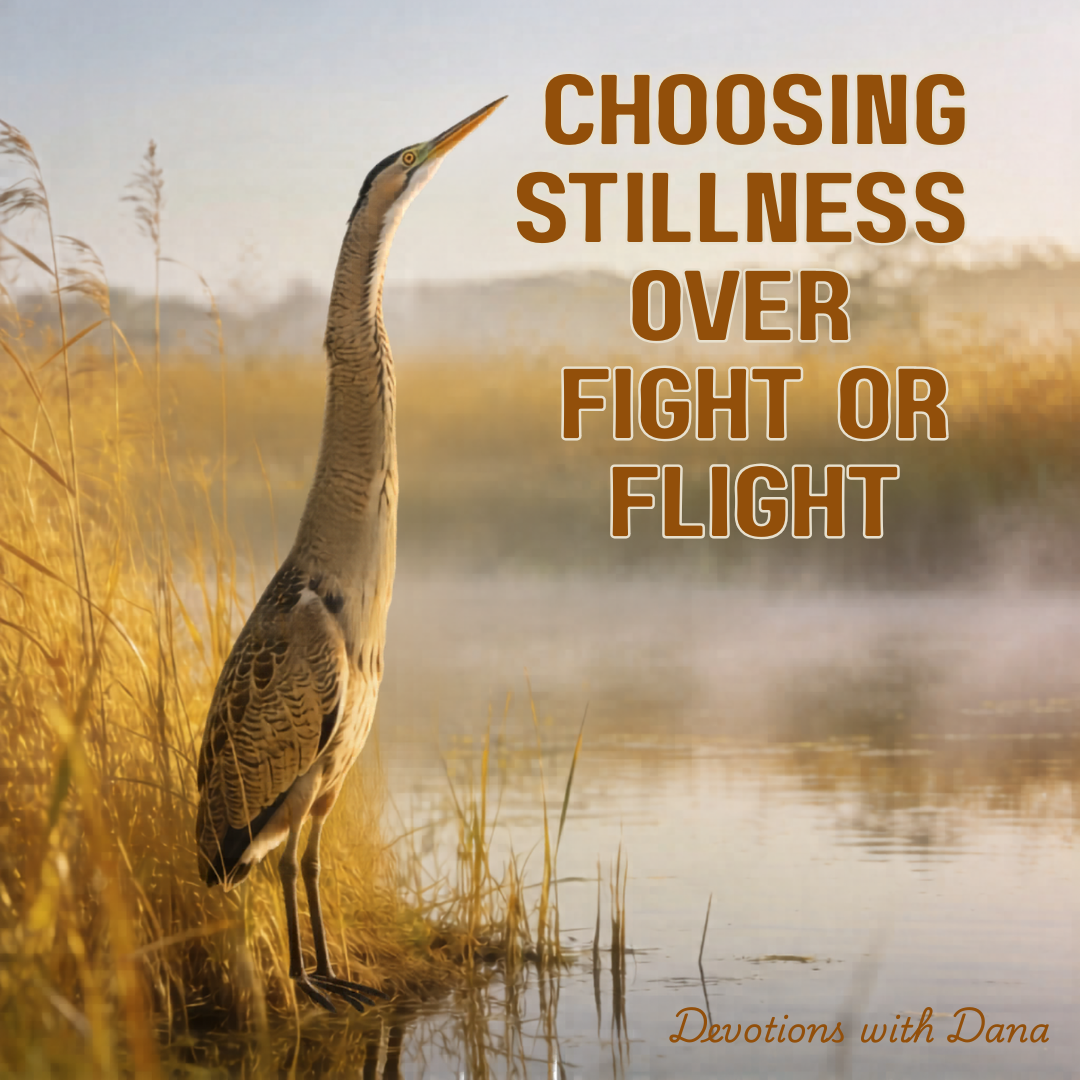
Choosing Stillness Over Fight or Flight
I thought I knew my Bible birds: sparrows, eagles, ravens, and even the poor rooster that unwittingly took part in Peter's darkest hour. But recently, I met a new feathered friend, and I can't believe I've been overlooking it all these years. Allow me to introduce the bittern.
I know, it sounds more like a stomach issue than a bird. But this "crazy" bird has completely captured my imagination. The bittern appears in several places in Scripture, tucked away in verses about ruined cities becoming lonely, marshy places: "I will also make it a possession for the bittern, and pools of water..." (Isaiah 14:23). It's a secretive marsh bird that blends so well with the reeds that you can stare right at it and never see it.
Here's the part that really struck me. When danger approaches, the bittern doesn't flap around, screech, or take off in a panic.
How To Turn on the Light When Fear Is Swooping
I have a confession to make: I am afraid of things that don't exist.
Not ghosts or monsters under the bed. I outgrew those...mostly. No, I'm talking about the imaginary monsters I construct out of thin air whenever I face a new deadline, a hard conversation, or an unexpected season of life. I can build something terrifying out of nothing, and sadly, I'm quite good at it.
Turns out, I'm in good company. Not just with other anxious humans, but with ancient settlers who looked up into the twilight sky and panicked over a little bird called the nighthawk.
By name alone, the nighthawk sounds ferocious. Something with hawk in the title ought to have razor-sharp talons, a hooked beak, and zero patience for your nonsense. Early observers watched it swooping through the dusk and slapped the most fearful label they could find on it: Hawk. Done.
The terror only grew worse from there.

When the Ground Disappears
I want to tell you something about greyhounds that sounds completely impossible until you see it for yourself.
When a greyhound runs at full speed, it uses what scientists call a double suspension gallop. What that means in plain English is this: twice during every stride, all four of the greyhound's feet leave the ground at the same time. Not once. Twice. In fact, when a greyhound is running full out, it spends roughly 75% of its time completely airborne. That elegant, flying creature is, at any given moment, more likely to be in the air than on the ground.
Think about that for a second.
For a greyhound, losing contact with the ground is not a crisis. It is not a catastrophe. It is not even a stumble. It is simply how the greyhound moves forward.

Handle With Care
If you've ever owned a greyhound or spent time around one, you know they are gloriously fragile.
Not in spirit. In skin.
A greyhound's skin is extraordinarily thin. There is very little fat or fur between the outside world and the muscle beneath. What would be a minor scrape for a Labrador can become a significant wound on a greyhound. A small bump. A brush against a rough surface. An accidental nip during play. Things that most dogs would shake off can leave a greyhound needing stitches. In fact, up to 25–30% of greyhounds have a condition that makes them prone to excessive bruising and bleeding, even from minor incidents. Greyhound owners quickly learn that what looks like nothing can actually be something, so they handle their hounds with gentleness, awareness, and care.
Now, doesn't that sound like some people you know?