When Cover-Ups Crack
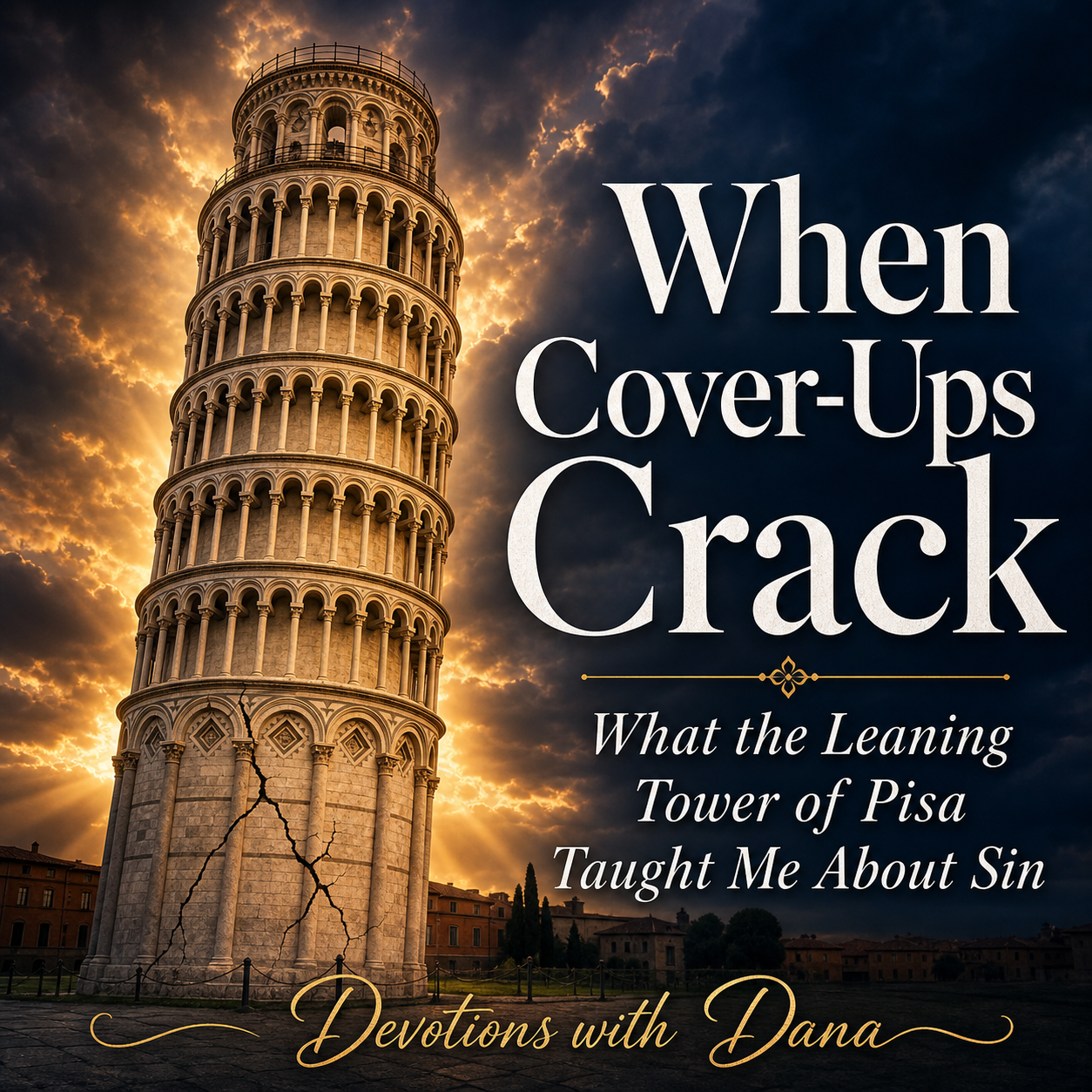
In 1173, construction began on what was supposed to be a magnificent bell tower in Pisa, Italy. Nobody planned on building a landmark. But about five years in, the foundation, a mere three meters deep, set in soft, unstable soil, began to shift. The tower started to lean, and the builders panicked.
Here's the part that really gets me: instead of stopping, tearing it down, and starting over with a proper foundation, they kept building. As they added more floors, engineers in later stages constructed one side of each story shorter than the other, trying to compensate for the lean and make everything look right from a distance. The problem was that this "fix" only made things worse. The added weight increased the lean. The tower ended up not just tilting but curving until it was bent like a banana, leaning and warped. Over the following centuries, engineers tried everything to correct the disaster, including counterweights, steel cables, soil extraction, drainage wells, and concrete foundation pillars. The final stabilization project alone cost over thirty million euros and took ten years to complete.
All because nobody was willing to stop and fix the real problem at the beginning.
Sound familiar?
King David knew this story. Well, not this story exactly, since he predated the Tower of Pisa by about 2,000 years. But he knew the feeling. In 2 Samuel 11, David looked where he shouldn't have looked, wanted what he shouldn't have wanted, and took what wasn't his to take. He committed adultery with Bathsheba, the wife of one of his most faithful soldiers, Uriah. And then, just like those Pisan builders, instead of stopping and making it right, David started adding stories to his tower of deception.
First cover-up attempt: bring Uriah home from the battlefield, wine and dine him, and send him home to his wife so the pregnancy could be explained away. Seemed reasonable. Clean. Tidy. Except Uriah, bless his noble heart, refused to sleep in his own bed while his fellow soldiers were out on the front lines. He was too honorable. The cover-up failed.
So David added another story to the tower. This time, it was darker. He sent Uriah back to battle carrying his own death warrant in the form of a letter to Joab, instructing him to put Uriah in the thick of the fighting and then pull back, leaving him exposed to the enemy. Uriah died. David's secret was safe...or so he thought. He had "corrected" the lean. Everything looked fine from the outside.
But just like the Leaning Tower of Pisa, the structure was anything but stable.
The Bible is relentlessly honest about what David did next: "But the thing that David had done displeased the LORD"(2 Samuel 11:27). God saw every brick David had laid in his tower of cover-ups, and He sent the prophet Nathan to tear the whole thing down. Nathan didn't come in swinging a battering ram, either. He told David a simple story about a rich man stealing a poor man's lamb. David, not recognizing himself as the villain of the story, declared the man worthy of death. "Thou art the man," Nathan said quietly (2 Samuel 12:7). And just like that, the tower crumbled.
Here's the beautiful, painful, glorious truth of what happened next. David didn't double down. He didn't find a new engineer to shore up the structure. He didn't add more counterweights to manage the lean. He stopped. He confessed. In Psalm 51, we get the raw, unfiltered prayer of a man who has torn down his own walls and is standing in the rubble, begging God to rebuild from the ground up: "Create in me a clean heart, O God; and renew a right spirit within me"(Psalm 51:10).
That's not a patch job. That's demolition and new construction. David wasn't asking God to straighten the lean a little. He was asking God to dig down to the bedrock and start fresh.
That is exactly what God does best.
When we come to Him with our sins, our cover-up stories, our carefully constructed towers of deception, He doesn't call in a committee of engineers and a $30 million stabilization project. He simply calls us to stop building, confess the mess, and let Him lay a new foundation. He wants to rebuild. He specializes in it.
"Be sure your sin will find you out" (Numbers 32:23).
Every cover-up eventually cracks. The lean always shows. But the grace of God? That never runs out. And the foundation He builds is rooted in forgiveness and redemption and will never, ever shift.
Stop adding stories to the tower. Let God rebuild from the ground up.
The spark for this devotion was a combination of projects I'm currently working on. I'm in the final stages of my newest historical novel, Hope Refined, which explores the second half of David's life (including his sins with Uriah and Bathsheba). I've also been busy over the past couple of months planning for our Holiday Bible Club, which explores the story of Nehemiah. Our first lesson is about how Nehemiah inspected the walls and rubble before starting to build, indicating he was likely checking the foundation. As a visual aid and object lesson, I plan to talk with the kids about the Leaning Tower of Pisa and explain the importance of having a firm foundation. As I studied more about the construction of the tower and the efforts made to "fix" the mess, my Nehemiah study and David book collided in my mind. Here's how the study unfolded from there:
Start with the physical fact. Research confirmed that construction began in 1173, the foundation was only 3 meters deep in unstable soil, and the lean was noticeable after just the second floor. Previous attempts to correct the lean in 1838 and 1934 actually increased the tilt. The multi-decade, €30 million stabilization project wasn't completed until 2001. The sheer escalating cost of an uncorrected mistake became a built-in sermon illustration.
Search for the biblical parallel. The cover-up cycle in 2 Samuel 11 mirrors the Tower's construction history almost beat for beat: a compromised foundation → attempts to compensate → each fix making things worse → a catastrophic moment of reckoning. Cross-reference Numbers 32:23 ("Be sure your sin will find you out") for the doctrinal anchor.
Follow the rabbit trail to Psalm 51. The natural destination after 2 Samuel 11-12 is Psalm 51, David's prayer of confession. The phrase "create in me a clean heart" (v.10) uses the Hebrew word bara — the same word used for God's creation of the universe in Genesis 1:1. David wasn't asking for a renovation; he was asking for something brand new, created from nothing. That's the theological depth beneath the metaphor.
Look for the contrast that makes the application sing. The Tower required €30 million, steel cables, soil extraction, and a decade of work just to partially correct a flawed foundation. God's rebuilding work costs usnothing, only the willingness to stop covering up. The contrast between human engineering and divine grace is the emotional core of the devotion.
Land on a single, actionable application. The question isn't just "Did David cover up his sin?" but "Are you still adding stories to a crooked tower?" That's the personal pivot that turns history into conviction.
⏱️ Total study time: About 2-3 hours, including research on the Tower's engineering history, cross-referencing the Hebrew of Psalm 51, and tracing the narrative arc of 2 Samuel 11-12. The hardest part was resisting the urge to include every fascinating fact about the Tower of Pisa I found. (Did you know it took nearly 200 years to build? The delays actually helped the foundation settle and probably saved it from collapsing. Now THERE'S a devotion for another day.)
Ready to try this yourself? Pick one everyday object (a building, an animal, a weather event) and ask: "What spiritual truth is hiding inside this thing?" Open your concordance, search for the emotional core of what the object represents, and let Scripture lead you from there. You'll be amazed at what God has hidden in plain sight. The treasure map is your Bible. The shovel? Curiosity. Start digging!