When the Body Attacks Itself
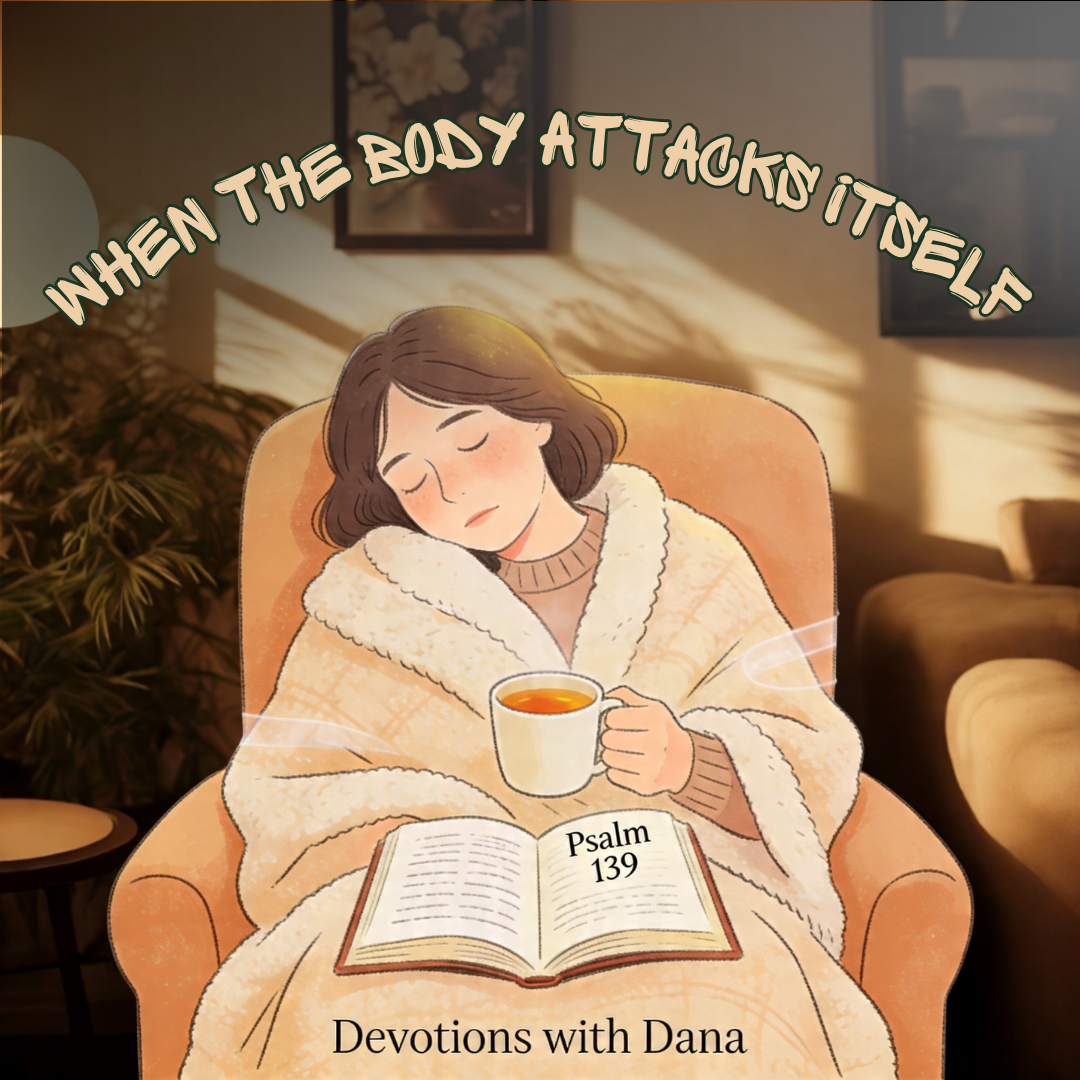
I still remember the first time I said it out loud: “Lord, my body is trying to kill me.”
It had been one of those days with joints on fire, muscles shaking, and fatigue so heavy I felt like I was wading through molasses. Meanwhile, my immune system was acting like an overzealous security guard, tackling anything that moved, including innocent bystanders like my thyroid and joints.
In my mind, my body had become the enemy.
And then there was that verse: “I will praise thee; for I am fearfully and wonderfully made: marvellous are thy works; and that my soul knoweth right well.” (Psalm 139:14)
I’ll be honest. At that moment, I really struggled with that verse.
“Fearfully and wonderfully made?” I grumbled. “Lord, this feels more like fearfully and wonderfully malfunctioning.”
For those of us with autoimmune disease or chronic illness, there’s a special kind of heartbreak in feeling like your own body has betrayed you. It’s hard enough fighting an outside enemy. It’s another thing entirely when the battle is happening under your own skin.
But as I sat with Psalm 139, the Lord began gently rearranging my thinking. My immune system going haywire is not the complete story of who I am. My illness is real. My symptoms are real. My limitations are real. But they are not the blueprint. They are the damage done to the blueprint in a fallen world.
God still knit me together on purpose. He still fashioned my personality, my gifts, and my calling. He knew every cell that would ever make up this body (even the ones that would later misfire), and He loved me enough to send His Son for me anyway. That is what “fearfully and wonderfully made” is talking about: a Creator who put thought, intention, and care into who we are, even though He knew we would live in bodies touched by the curse of sin.
The Bible is very honest about that, by the way. It tells us that “the whole creation groaneth and travaileth in pain together until now,” and that we ourselves “groan within ourselves, waiting for the adoption, to wit, the redemption of our body.” (Romans 8:22–23) This aching, creaking, misfiring body is exactly what Scripture said life in a broken world would feel like.
So how do we live between “fearfully made” and “physically falling apart”?
For me, it’s been a slow, tear-stained process of learning to see my body not as a traitor, but as a wounded soldier. It’s still the temple of the Holy Ghost, even when the plumbing leaks and the roof creaks. It’s still a gift, even on the days I want the gift receipt.
On the hard days, I remind myself:
My body is not my identity; it’s my temporary address.
My symptoms are not evidence that God messed up; they’re evidence that this world is not my final home.
My weakness is not useless; it is a platform for God’s strength. “For which cause we faint not; but though our outward man perish, yet the inward man is renewed day by day.” (2 Corinthians 4:16)
Practically speaking, that means I can stop apologizing to God (and others) for needing rest, medicine, naps, mobility aids, or boundaries. He already knows my frame. He remembers I am dust. He is not rolling His eyes when I cancel plans or lie on the couch with my heating pad. He’s sitting with me in it.
It also means I can praise Him in this body, not just promise to praise Him once I get a new one. I can say with the psalmist, “I will praise thee,” even when my joints are protesting the very idea. My praise may sound more like a whisper than a shout some days, but it still counts.
And one day, this “body that attacks itself” will be fully, finally redeemed. No more flares. No more fatigue. No more brain fog. Until that day, we walk (or shuffle, or hobble, or roll) by faith, knowing we are still fearfully and wonderfully made.
So, dear fellow chronic-illness warrior, you are not a factory reject. You are a masterpiece in a damaged frame. Your body may attack itself, but your God never will. He holds every cell, every tear, every weary sigh, and He calls you wonderfully made.
🔍 PULLING BACK THE CURTAIN : A Peek at the Study Behind This Post
The spark for this devotion was that raw, honest thought: “How can I be fearfully and wonderfully made when my own body is attacking itself?”
Start with the honest feeling.
I began by naming the emotion in prayer and exploring the feeling of being betrayed by my own body, without trying to “pretty it up” for God. That honest confession became my starting question.Sit in Psalm 139, not just verse 14.
I read the entire psalm slowly, underlining every phrase about God’s knowledge and care: “thou hast possessed my reins,” “thou hast covered me in my mother’s womb,” “thine eyes did see my substance.” I asked, “What is God saying about my body as a whole, not just my diagnosis?”Chase the ‘broken body’ theme through Scripture.
From there, I followed cross-references to passages about suffering bodies: Romans 8:22–23 on creation groaning, and 2 Corinthians 4:16 on the outward man perishing while the inward man is renewed. I used a simple concordance and cross-reference notes in my Bible—nothing fancy, just curiosity and a pen.Distinguish design from damage.
As I compared those verses, a pattern emerged: God’s design is good, but the Fall damaged the world we live in. That’s where the “blueprint vs. brokenness” idea clicked, and the structure of the devotion began to form—story, tension, then truth.Shape it into encouragement.
Finally, I asked, “If a friend with chronic illness were sitting on my couch, what would I want her to hear from these verses?” I turned my notes into a conversational, hope-filled reminder that our bodies may be broken, but our identity in Christ is not.
Time frame: The entire process—reading, cross-referencing, and writing rough notes—took about an hour and a half (not counting years of living it!).
Now it’s your turn: Grab one verse about your body—maybe Psalm 139:14 or 2 Corinthians 4:16—and walk it through these same steps... Ask your hard question, read the whole chapter, follow a couple of cross-references, and then write down what God shows you. You might be surprised how your own “everyday aches” turn into a powerful devotion straight from your Bible and your heart.