The Quiet Creep of Compromise
It started so quietly. No trumpet blast. No neon sign flashing WARNING: SIN AHEAD.Just a king, a rooftop, and a little too much time on his hands.
Second Samuel 11 opens with one of the most haunting lines in all of Scripture: "And it came to pass, after the year was expired, at the time when kings go forth to battle, that David sent Joab, and his servants with him, and all Israel; and they destroyed the children of Ammon, and besieged Rabbah. But David tarried still at Jerusalem." (2 Samuel 11:1)
Did you catch that? But David tarried.Four little words. A thousand devastating consequences.
Spring had come, the time when a king was supposed to lace up his armor and lead his men into battle. But David didn't go. Maybe he was tired. Maybe he figured he'd earned a break. Maybe he told himself it was just this once. Whatever the reason, he stayed home, and idle feet eventually found their way to a rooftop. And there, on that rooftop in the golden evening light, was a woman bathing. And instead of turning away, David lingered. He looked. And one look led to one inquiry, which led to one invitation, which led to one devastating night, which led to lies, manipulation, a pregnancy, and ultimately the arranged death of an innocent man.
The fall of David didn't begin with adultery. It began with a skipped duty. It began on a rooftop.
The thing about small compromises is that they rarely introduce themselves honestly. They don't show up at the door in a top hat, twirling a villain's mustache. They tiptoe in through the side window, wearing something that looks perfectly innocent. A skipped prayer here. An avoided responsibility there. Just this once. It's not a big deal. Nobody's going to get hurt. Oh, but friend, they are…starting with you.
Proverbs 4:23 says, "Keep thy heart with all diligence; for out of it are the issues of life."
That word keep in the Hebrew means to guard, to watch over, to protect, as a sentinel watches the city walls. You know what a sentinel does NOT do? Wander off the wall to take a nap. He stays alert. He stays at his post.
David left his post, both literally and spiritually. And the moment he stopped being a soldier, he became a target.
The same is true for us. God has given each of us a purpose, a post, a place where He has called us to stand. Maybe it's a ministry, a marriage, a season of prayer, or a commitment you made to the Lord in the quiet of your heart. Wherever that post is, you can be sure of this: the moment you wander off it, you are far more vulnerable than you've ever been. Idle hands and idle hearts are the devil's favorite playground.
And it almost never starts dramatically. It starts small. A morning where we skip the Word because we're busy. Then two mornings. Then a whole week. Or maybe we stop showing up to the place of service God called us to. Or maybe we entertain a thought we know we shouldn't entertain, just for a minute and just to see where it goes. And slowly, so slowly we barely notice, we find ourselves far from where we started, wondering how on earth we got here.
David could have told you exactly how he got there. He looked when he should have turned away. He stayed when he should have gone.
What does your rooftop look like? What's the small thing you've been excusing, the little compromise you've been allowing to park itself in your heart? Because here's the good news: you don't have to wait until you're in the full-blown catastrophe to course-correct. The same God who later heard David's broken cry of "Create in me a clean heart, O God; and renew a right spirit within me" (Psalm 51:10) is still in the restoration business today.
But oh, how much better to stay off the roof in the first place.
Stay at your post. Guard your heart. Don't tarry when God has called you to march. The enemy is counting on your idleness. Don't give it to him.
🔍 PULLING BACK THE CURTAIN: A Peek at the Study Behind This Post
The spark for this devotion came from four of the most overlooked words in the David narrative: "But David tarried still." Most readers rush past them to get to the dramatic part, but those four words are the whole story.
Step 1 — The Initial Observation: Reading 2 Samuel 11:1, the phrase 'at the time when kings go forth to battle' sets up an immediate contrast. The text establishes what David should have been doing before it tells us what he actually did. That structural setup in Scripture is never accidental. When the Bible takes time to tell you what someone should have done, pay close attention to what they did instead.
Step 2 — Word Study on 'Tarried ': Looking up the Hebrew root yashab (translated 'tarried' or 'remained'), you find it simply means to sit, to dwell, to stay. There's nothing inherently sinful in the word itself, which is exactly the point. David's sin didn't start with a wicked act. It started with a neutral one. Sitting still at the wrong time, in the wrong place, for the wrong reason. A concordance search (Strong's H3427) reveals yashab used in contrast to active duty throughout the Old Testament, including in Judges and Chronicles.
Step 3 — Cross-Reference Search: From there, a cross-reference search on idleness and temptation leads to Proverbs 4:23 ('Keep thy heart with all diligence'), Proverbs 6:9-10 (the sluggard), and 1 Corinthians 10:12 ('let him that thinketh he standeth take heed lest he fall'). Each verse added a new layer. Idleness isn't just passive. It's a spiritual vulnerability.
Step 4 — The Rabbit Trail (Psalm 51): Digging into David's later repentance in Psalm 51 revealed that David himself connected his fall back to his heart — 'Create in me a clean heart, O God' — not just his actions. This gave the devotion its landing point: the issue was never the rooftop. It was always the heart.
Step 5 — The Application Crystallizes: The 'post' metaphor came from meditating on Proverbs 4:23 in the KJV, where the word 'keep' (Hebrew natsar) carries the image of a watchman guarding a city. A sentinel doesn't leave his post. Neither should we. That image tied David's physical absence from battle to our spiritual tendency to abandon the purposes God has called us to, and the devotion came together.
⏱️ Total study time: roughly 2.5 hours, though the tea breaks are not included in that estimate. Good Bible study has a way of making time disappear.
Ready to try it yourself? Pick any narrative passage in the Bible and look for the words the text uses before the big moment. Ask yourself: what should have happened here? Then trace the contrast. Pull out a concordance, look up one key word in Hebrew or Greek, and follow the thread. You might be shocked at what you find. Happy digging!"

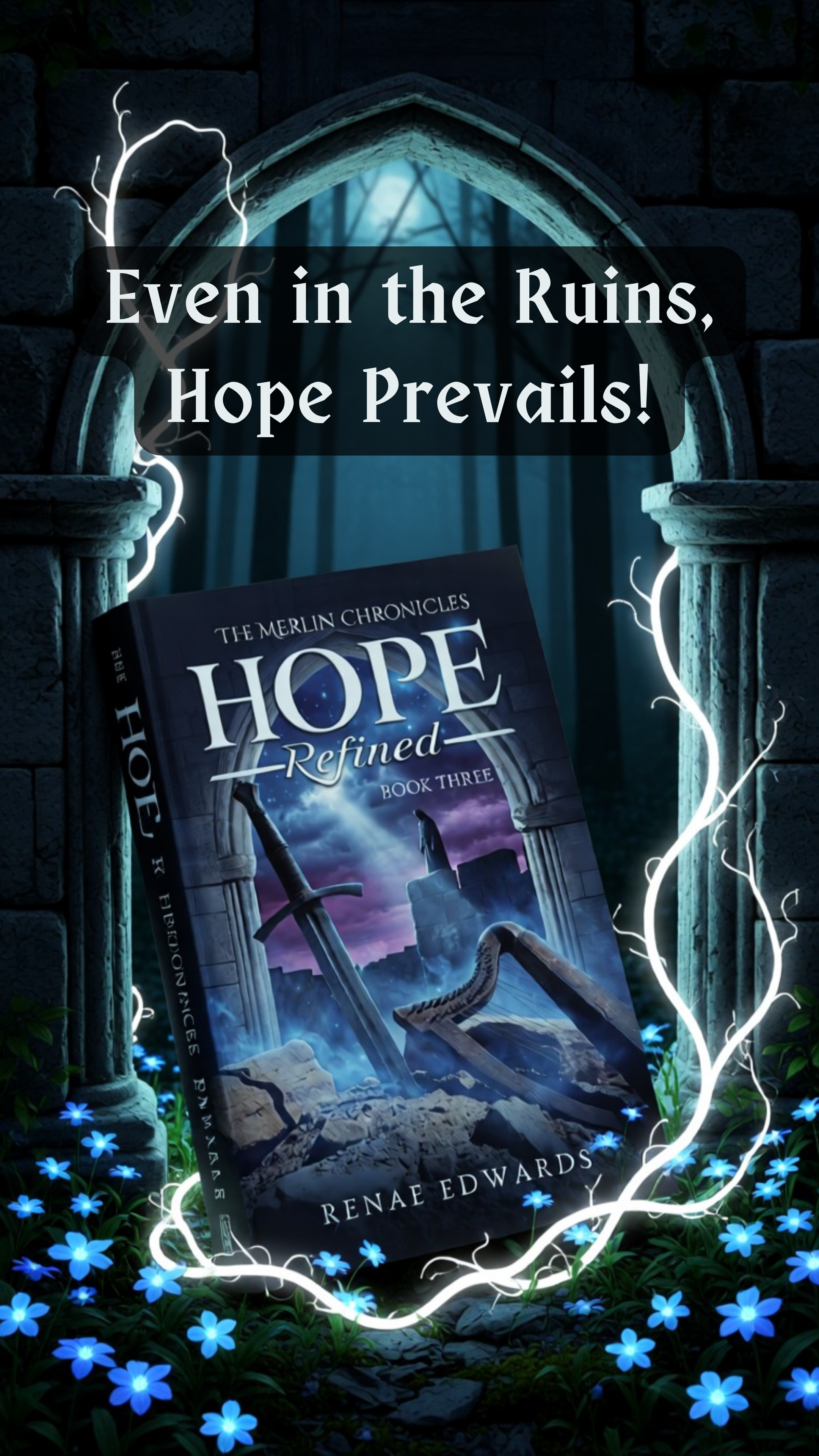
Set against the familiar yet freshly told story of King David, Hope Refined is a deeply human, Scripture‑faithful novel about the long shadow of sin, the hard road of repentance, and the God who does not abandon His people, even when His anointed king falls.
For behind-the-scenes insights, updates on upcoming books, and exclusive content, you are warmly invited to subscribe to my dedicated Renae Edwards’ Substack at https://substack.com/@renaeedwards. It’s completely free!