The Myth of the Flawless Hero
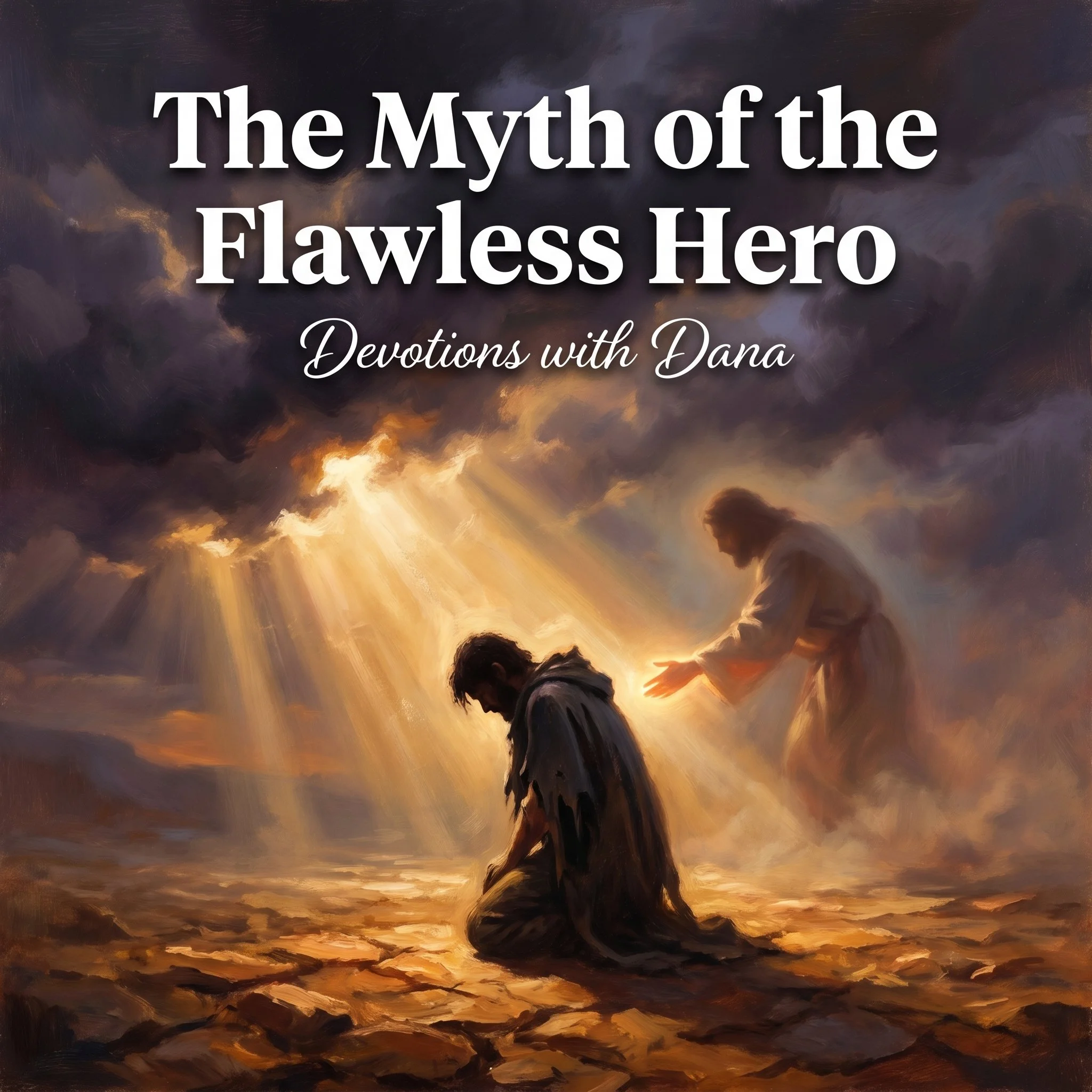
I have a confession to make. I've been guilty of building pedestals.
Not literal ones, mind you. I'm not much of a carpenter (just ask my Holiday Bible Club kids).
But in my mind? Oh, I've constructed some beautiful monuments to the people I admire most. My favorite preachers. The missionaries whose newsletters I devoured. The women who taught me the Word with such fire and grace that I was sure they'd never had a bad day in their lives.
And then, inevitably, several of them fell off.
That crash is a special kind of heartbreak, isn't it? It's not just that a person disappointed you. It's that the idea you'd built around them came crumbling down, and sometimes, if you're not careful, your faith goes down with the rubble.
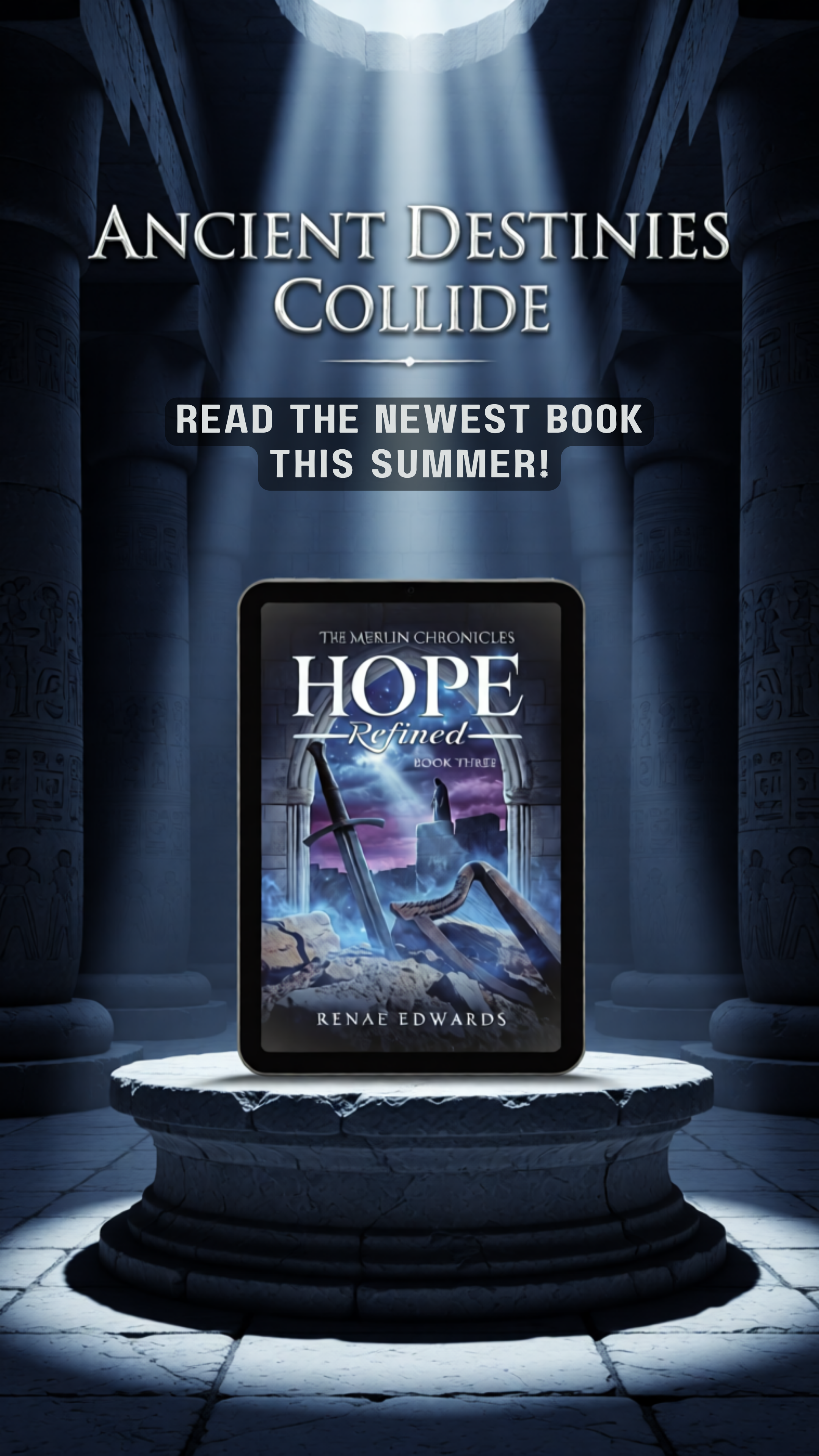
I've been thinking about this a lot lately, actually. In my upcoming novel, Hope Refined, there's a moment when Jesus reveals a jaw-dropping truth to Merlin (yes, that Merlin):
"The hero is a myth, Merlin. The man is real, and the man is the only one God can use."
Flawed men and women.
Not polished ones.
Not perfect ones.
Real ones.
That line stopped me cold when I wrote it, because I realized I'd been believing a lie. Somewhere along the way, I convinced myself that God's greatest servants are somehow above the mess the rest of us wade through every day.
They aren't. They never were.
Think about the men God called giants of the faith.
Moses murdered a man and later disobeyed a command, costing him the Promised Land.
David, the man after God's own heart, committed adultery and arranged a murder to cover it up.
Peter, the one Jesus Himself prayed for, denied Christ three times while warming himself by the enemy's fire.
These weren't minor stumbles. These were full-on, face-in-the-dirt, how-did-we-get-here disasters.
And yet...
God didn't erase their stories. He didn't pretend the failures never happened. He did something far more extraordinary. He continued them.
Moses still got to see the Promised Land, just from a mountaintop.
David still penned half the Psalms.
And Peter? That broken, weeping fisherman became the preacher whose first sermon saw three thousand souls saved in a single afternoon.
That's not a footnote. That's the whole point.
The Bible puts it plainly in Psalm 37:23-24: "The steps of a good man are ordered by the LORD: and he delighteth in his way. Though he fall, he shall not be utterly cast down: for the LORD upholdeth him with his hand."
Did you catch that? God didn't say if he falls. He said though he falls. The fall is assumed. The question is what happens next.
Here's what I think we get wrong. When a spiritual hero stumbles, we make it about us. Our shock. Our disillusionment. Our grief. And yes, some of that is legitimate. But Scripture is clear that we have a responsibility in that moment.
Galatians 6:1 tells us, "Brethren, if a man be overtaken in a fault, ye which are spiritual, restore such an one in the spirit of meekness; considering thyself, lest thou also be tempted."
The word "restore" there is the same word used to set a broken bone or mend a torn net. It's not a gentle suggestion. It's an active, purposeful work.
We are called to help them stand back up.
Not because their failure didn't matter.
Not because accountability isn't necessary.
But because their story does not end face-down in the dirt.
The enemy would love nothing more than for us to abandon our fallen leaders, to walk away in disgust, and in doing so, to quietly abandon the God whose servants they were. Don't give him the satisfaction.
The flawless hero is a myth. Always has been.
But a God who redeems the broken, who ordains the flawed, who writes resurrection into the middle of stories that looked finished? That's not a myth at all.
That's the gospel!
🔍 PULLING BACK THE CURTAIN: A Peek at the Study Behind This Post
Here's what sparked this one: the Hebrew word in Galatians 6:1 translated "restore" — katartizō — is the exact same word used in Matthew 4:21 for James and John mending fishing nets. That wasn't a coincidence worth passing up.
The Starting Point — A fictional conversation. The seed was planted in my own manuscript, Hope Refined, where the line between Jesus and Merlin stopped the writing cold. That's where the study began.
The Scripture Search — Hunting for the "though." A word search on "fall" paired with "restore" and "redeem" in the KJV led quickly to Psalm 37:23-24. The key discovery? The word though — not if — in verse 24. That tiny word does enormous theological work and became the pivot point of the entire devotion.
The Rabbit Trail — katartizō in Galatians 6:1. Looking up the original Greek behind "restore" in Galatians 6:1 led to the fishing net connection in Matthew 4:21. A quick cross-reference in a Greek lexicon (Strong's Concordance, entry G2675) confirmed it: to mend, to make complete, to set a broken bone. The image of setting a fracture rather than simply forgiving a fault gave the application real teeth. (Resources: Strong's Exhaustive Concordance, Blue Letter Bible online.)
The Biblical Case Studies — Moses, David, Peter. Rather than relying on the most-quoted verse (Proverbs 3:5-6, not used here on purpose!), the study moved to the actual biographies of some of Scripture's most famous failures. Each man was checked: What was the failure? What came after? This took the devotion from a principle into a pattern of God's consistent practice across centuries.
The Application Turn — Making it about the reader, not just the fallen leader. The natural instinct is to write about fallen leaders. But re-reading Galatians 6:1 through the lens of katartizō shifted focus: the reader isn't a spectator to someone else's failure. They're a bone-setter. That's where the devotion found its real purpose.
⏱️ Total study time: approximately 2.5 hours — mostly because that Greek rabbit trail was too delightful to leave quickly. Worth every minute.
Want to try this yourself? Start with one word in a familiar passage. Look it up in its original language, follow the cross-references, and see where it leads. You might just find that the most ordinary verse you've read a hundred times is sitting on top of a gold mine. Grab your Bible, a copy of Strong's Concordance (free at BlueLetterBible.org), and a notebook. The treasure hunt is waiting.
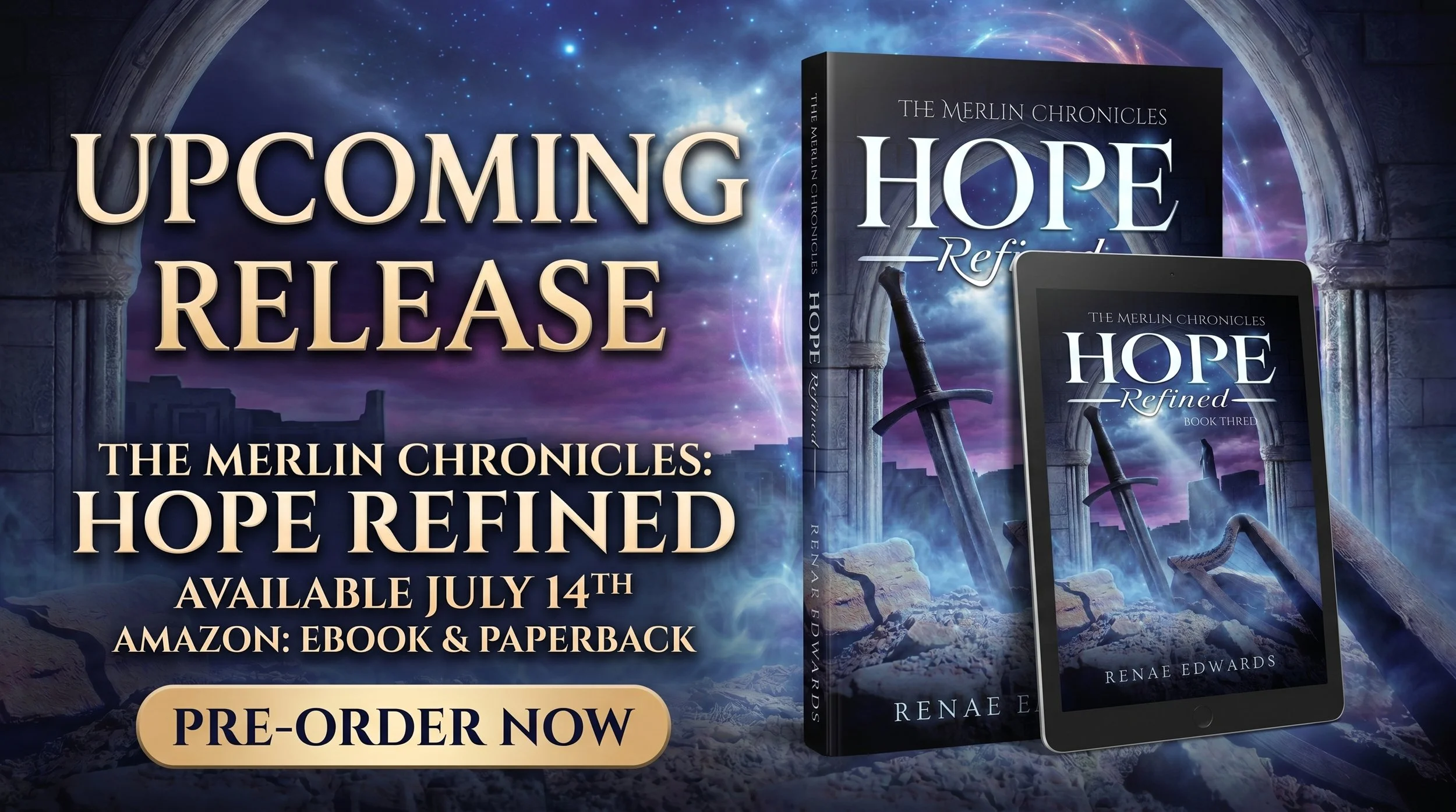
Blending the grit of biblical history with the wonder of Arthurian legend, Hope Refined reveals a secret chapter of Merlin’s long life when he learned that even the greatest earthly kings fall and that genuine hope lies in a very different kingdom.